Buying a used car from the USA for export while you are overseas requires more than finding the right model at the right price.
You may not be able to see the car yourself. Photos can hide problems, a vehicle history report can miss repairs, and the title status may be different from what you expected. A car that looks like a good deal can become an expensive mistake after transport, repairs, paperwork, and other costs are added.
Core safety rule
The safest approach is to check the vehicle in several different ways before you commit to the purchase.
Use this checklist to verify destination fit, identity, history, current condition, seller information, total cost, and export readiness before you pay.
1. Before Buying a Used Car From the USA, Confirm Destination Fit
If you are buying a used car from the USA for export, start with your own country’s requirements, not with the vehicle listing.
A car may be available for purchase in the United States but still be difficult, expensive, or impossible to import or register in your destination country.
Rules can depend on factors such as:
- vehicle age;
- engine type or size;
- emissions requirements;
- safety standards;
- left- or right-hand-drive rules;
- title or damage history;
- modifications;
- vehicle category; and
- local registration requirements.
Do not assume that a vehicle is suitable for your country simply because another similar vehicle has been imported there.
Requirements change, and two vehicles that look almost identical may have different specifications or document histories.
Before purchasing, confirm the current requirements with the appropriate customs, transport, registration, or other competent authority in your destination country.
2. Get the VIN and Make Sure It Matches
The Vehicle Identification Number, or VIN, is one of the most important pieces of information when checking a used vehicle.
Ask for the full VIN before making a purchase decision.
Compare it across every reliable source available to you, including the vehicle itself, listing information, ownership documents, inspection report, and purchase paperwork.
A VIN discrepancy should be resolved before you move forward.
The VIN also allows you to investigate the vehicle’s recorded history and check for open safety recalls.
3. Check the Vehicle’s Title and Brand History
Do not rely only on a seller describing a vehicle as having a “clean title.”
Verify the available title history independently.
The U.S. National Motor Vehicle Title Information System, or NMVTIS, can provide information such as the current state of title, title brand history, the latest reported odometer reading, and certain salvage or total-loss records. Title brands may include terms such as salvage, junk, or flood.
This matters because the condition shown in a listing does not always tell you what has happened to a vehicle in the past.
A professionally repaired vehicle may look excellent in photographs while still having an important title or damage history.
Title terminology can also vary between U.S. states, so focus on the complete recorded history rather than one word in an advertisement.
For export purchases, also confirm that the ownership documents available for the vehicle are appropriate for the planned transaction and export process before you pay. Exact requirements should be checked for your situation.
4. Review a Vehicle History Report—but Do Not Stop There
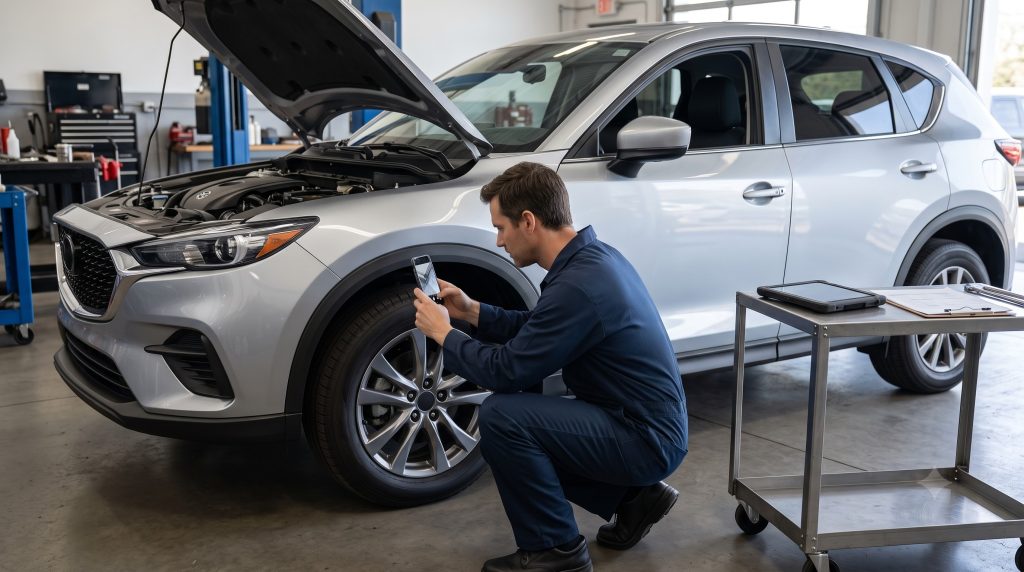
When buying a used car from the USA remotely, a vehicle history report is an important screening tool.
It may help identify issues involving:
- title history;
- reported mileage;
- salvage or total-loss records;
- previous ownership;
- reported accidents; and
- other recorded events.
NMVTIS is particularly useful for title, brand, odometer, salvage, and total-loss information. The U.S. Department of Justice also warns that its database does not contain every type of vehicle information, such as complete repair history.
Private vehicle-history providers may contain additional information, depending on the records available to them.
History report limit
A clean history report does not prove that a car has no problems.
Use recorded history as one layer of evidence and compare it with current photos, documents, and an independent inspection.
Damage may have been repaired without being reported. Maintenance may have been performed without appearing in a database. Mechanical problems may have no connection to the vehicle’s recorded title history.
Use the history report as one part of your decision, not as the entire inspection.
5. Check the Mileage for Inconsistencies
Do not judge mileage only by the number displayed on the dashboard.
Compare the current odometer reading with previous recorded mileage where available.
Look for a logical progression over time.
For example, a vehicle showing 55,000 miles today should raise questions if an older record shows significantly higher mileage.
NMVTIS includes the latest reported odometer information and identifies mileage information as an important tool for detecting discrepancies.
Also consider whether the physical condition of the vehicle seems reasonable for the reported mileage.
Heavy wear on the driver’s seat, steering wheel, pedals, buttons, or cargo area does not automatically prove an odometer problem, but it may give you a reason to investigate further.
6. Check for Open Safety Recalls
Before buying, enter the VIN into the U.S. National Highway Traffic Safety Administration recall lookup.
NHTSA’s VIN search can show whether a specific vehicle has an unrepaired safety recall covered by its database.
An open recall does not automatically mean you should reject the vehicle.
But you should understand the issue and determine how it will be handled, especially if the car will leave the United States soon after purchase.
Do this check before buying rather than discovering the problem after the vehicle has arrived in another country.
7. Arrange an Independent Pre-Purchase Inspection
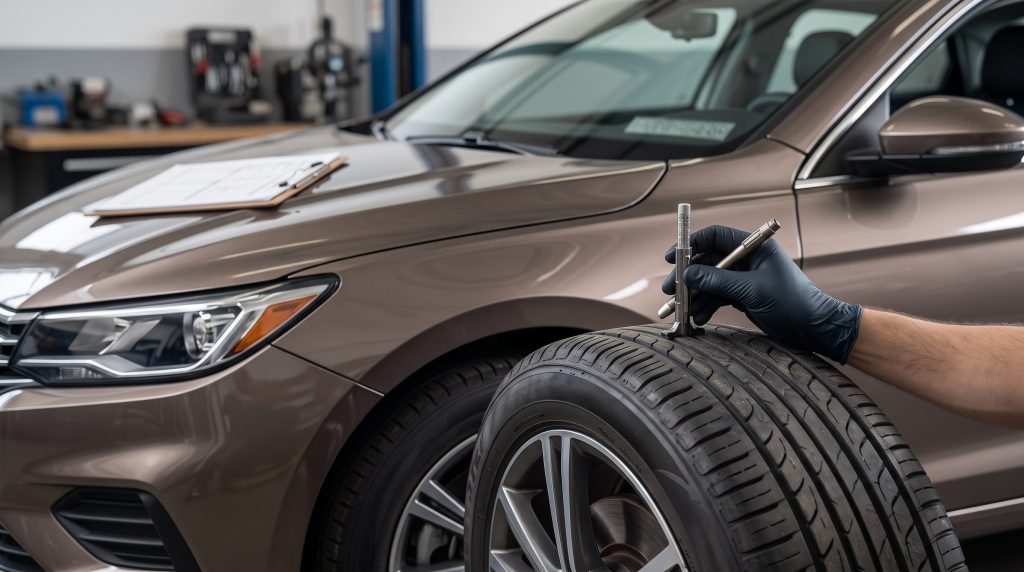
A vehicle history report cannot tell you the current mechanical condition of the car.
That is why an independent pre-purchase inspection is one of the strongest checks you can make before buying a used car from the USA for export.
The U.S. Federal Trade Commission specifically recommends an independent mechanical inspection when buying a used vehicle and notes that a vehicle history report is not a substitute for one.
When possible, the person inspecting the car should be independent from the seller.
The inspection should look beyond cosmetic appearance and examine important areas such as:
- engine and transmission condition;
- fluid leaks;
- suspension and steering;
- brakes;
- tires;
- cooling system;
- warning lights and diagnostic faults;
- electrical equipment;
- underbody condition;
- signs of corrosion;
- previous accident repairs; and
- signs of water or flood damage.
For higher-value vehicles, complex cars, performance models, hybrids, EVs, or vehicles known for expensive mechanical problems, consider using a technician familiar with that specific make or model.
Ask for a written inspection report whenever possible.
8. Do Not Evaluate Accident Damage from Photos Alone
Online photos are useful, but they have limits.
Lighting, camera angles, image quality, dirt, reflections, and recently replaced body panels can all affect what you see.
If you are buying remotely, ask for current, detailed photos or video showing the actual vehicle.
Useful areas to inspect include the body panels, panel gaps, paint finish, glass, wheels, tires, underbody, engine compartment, interior, instrument cluster, cargo area, and areas where previous repairs may be visible.
Compare what you see with the vehicle history report and inspection findings.
If the three sources tell different stories, investigate the difference before buying.
9. Ask for Maintenance and Repair Records
A vehicle with good documentation is easier to evaluate than one with no history at all.
Ask whether maintenance invoices, service records, repair receipts, or other documentation are available.
Look for evidence that important maintenance was completed when required.
The exact maintenance items depend on the vehicle. A timing belt, transmission service, battery replacement, cooling-system service, or other major maintenance item may matter greatly on one model and not on another.
For this reason, research the specific year, make, model, engine, and transmission you are considering.
A general used-car checklist is not a replacement for model-specific research.
10. Check the Vehicle’s Equipment and Specifications
A U.S.-market version of a vehicle may not have exactly the same specifications as the version sold in your country.
Before buying, confirm the details that matter to you.
These might include:
- engine and transmission;
- drivetrain;
- fuel type;
- charging specifications for an EV;
- trim level;
- wheel and tire sizes;
- lighting;
- infotainment system;
- navigation;
- radio frequencies;
- available languages;
- spare key;
- spare tire or repair kit; and
- included accessories.
Do not rely only on an automatically generated listing description.
Where possible, verify important specifications from the VIN, manufacturer information, photographs, or a physical inspection.
11. Understand the Actual Condition, Not Just the Listing Status
Terms such as “runs,” “drives,” “excellent condition,” or “minor damage” can be interpreted differently by different sellers and platforms.
Treat these descriptions as starting information, not proof.
Ask practical questions:
- Does the engine start from cold?
- Are warning lights present?
- Does the vehicle move under its own power?
- Are there fluid leaks?
- Does the air conditioning work?
- Are airbags present and functioning correctly?
- Are any parts missing?
- Are there electrical faults?
- Is there visible structural damage?
Then compare the answers with independent evidence.
For an international purchase, uncertainty becomes more expensive after the car has left the seller.
12. Calculate More Than the Purchase Price
A low advertised price does not necessarily mean a low total cost.
Before committing to a used car from the USA, build a realistic budget around the entire export transaction.
Depending on the purchase and destination, relevant cost categories may include the vehicle price, seller or auction charges, inspection, inland transport, export-related administration, international transport, insurance where applicable, destination charges, taxes or duties, repairs, and registration.
The exact charges depend on the transaction and destination, so obtain current information rather than relying on old examples from forums or social media.
Compare total cost and risk
A useful comparison is not which car has the lowest purchase price.
A better question is which acceptable car has the most reasonable total cost and risk.
A slightly more expensive vehicle with better history and condition may ultimately be a better purchase than a cheaper vehicle that requires major repairs.
13. Confirm Who Is Selling the Vehicle
Before sending money, understand who the seller is.
Are you buying from a dealer, auction, broker, company, or private individual?
Make sure the seller’s identity and the transaction documents make sense together.
If you are buying from a U.S. dealer, review the FTC Buyers Guide when applicable. It tells buyers whether the vehicle is being sold “as is” or with a warranty and encourages buyers to obtain a vehicle history report and independent inspection.
Get important representations and agreements in writing.
Be cautious when names, payment instructions, seller information, vehicle details, or documents do not match.
Do not let pressure to “buy today” replace basic verification.
14. Check Export Readiness Before Buying a Used Car From the USA
Do not wait until after purchasing the car to ask whether the paperwork is suitable for export.
The vehicle’s title status, ownership documentation, VIN, seller documents, and any third-party ownership interest may affect what must happen next.
U.S. export requirements for used self-propelled vehicles are specific, and the details can depend on the vehicle’s documentation and the method or port of export. Current requirements should therefore be confirmed with the relevant U.S. authorities or a qualified export professional before purchase.
Your destination country has separate import and registration requirements.
Treat these as two different questions:
Can the vehicle leave the United States correctly?
and
Can the vehicle be imported and registered where I need it?
You want both answers before committing significant money.
Red Flags That Deserve More Investigation
Some issues do not automatically mean a vehicle is a bad purchase. They do mean you need more information before buying a used car from the USA and sending it overseas.
Examples include:
- inconsistent VIN information;
- unexplained mileage changes;
- missing ownership documents;
- significant differences between photographs and history records;
- signs of previous structural or flood damage;
- warning lights;
- incomplete inspection access;
- unclear seller identity;
- unexpected changes to payment instructions; or
- pressure to complete the purchase before basic checks are finished.
The goal is not to find a used car with a perfect history. The goal is to understand what you are actually buying before the vehicle is paid for and sent thousands of miles away.
Before You Buy a Used Car From the USA for Export
Before buying a used car from the USA for export, you should be able to answer five basic questions with confidence:
- Is this the correct vehicle?
The VIN, specifications, mileage, and listing details match. - Do I understand its history?
You have reviewed available title, mileage, accident, salvage, and other history information. - Do I understand its current condition?
You have independent evidence rather than relying only on seller photos or descriptions. - Does the paperwork make sense for the planned transaction and export?
Important ownership and export questions have been checked before payment. - Does the total purchase still make sense after all expected costs and risks?
You are comparing the complete transaction, not only the advertised vehicle price.
If one of these questions cannot be answered, investigate before moving forward.
Frequently Asked Questions
No. A vehicle history report is useful for checking recorded title, mileage, accident, salvage, and ownership information, but it cannot show every mechanical problem or every unreported repair. Use it as one screening tool and compare it with current photos, seller documents, model-specific research, and an independent pre-purchase inspection whenever possible.
Use the VIN to confirm that the vehicle in the listing, ownership documents, inspection report, and purchase paperwork is the same vehicle. The VIN can also support title and history research and a safety-recall check. Any mismatch, missing digit, or unexplained difference should be resolved before you make a purchase decision or send payment.
Not necessarily. A clean title does not prove that a vehicle has never been damaged, repaired, or involved in an event that was not reflected in the title record. Review the available title and vehicle-history information, then compare it with current photographs, maintenance records, and an independent physical inspection before deciding whether the vehicle is acceptable.
Use several independent sources rather than relying on the listing alone. Confirm the VIN, review available title and vehicle-history records, request current detailed photos or video, check for open safety recalls, research the exact model, and arrange an independent pre-purchase inspection when possible. Compare the evidence and investigate any important inconsistency before paying.
Yes. Confirm the current import and registration requirements that apply in your destination before committing to the vehicle. Availability for sale in the United States does not establish that the same vehicle can be imported or registered elsewhere. Requirements vary and can change over time, so verify them with the appropriate authority or a qualified professional for your situation.