If you are buying a vehicle in the United States for export, one early decision is whether to use a U.S. car auction or a dealer. Neither route is automatically better: the right choice depends on the individual vehicle, total acquisition cost, inspection options, title documents, export readiness, and how much purchase complexity you are prepared to manage.
Auctions can provide access to a large and changing pool of vehicles, with the final purchase price determined by bidding or another auction sale format. The trade-off is that buyer access, fees, inspection opportunities, and sale terms can vary by auction, location, and vehicle.
Dealer purchases are usually easier to understand as retail transactions. You may have more time to inspect the vehicle, discuss the price, and review warranty disclosures, but a dealer’s advertised price is still only one part of the buying decision.
What really matters
For an international buyer, compare auction access, vehicle condition, total buying cost, title status, export readiness, and your tolerance for risk. The selling channel matters, but the quality of the complete transaction matters more.
Key Takeaways
A U.S. car auction can offer broad inventory and competitive bidding, but access rules, fees, inspection limits, and sale terms can add complexity.
A dealer can offer a more familiar retail process, but the advertised price, warranty status, and vehicle condition still require careful review.
For an international buyer, the better route is the one that produces the stronger complete transaction: acceptable condition, clear documents, manageable risk, and a realistic total cost.
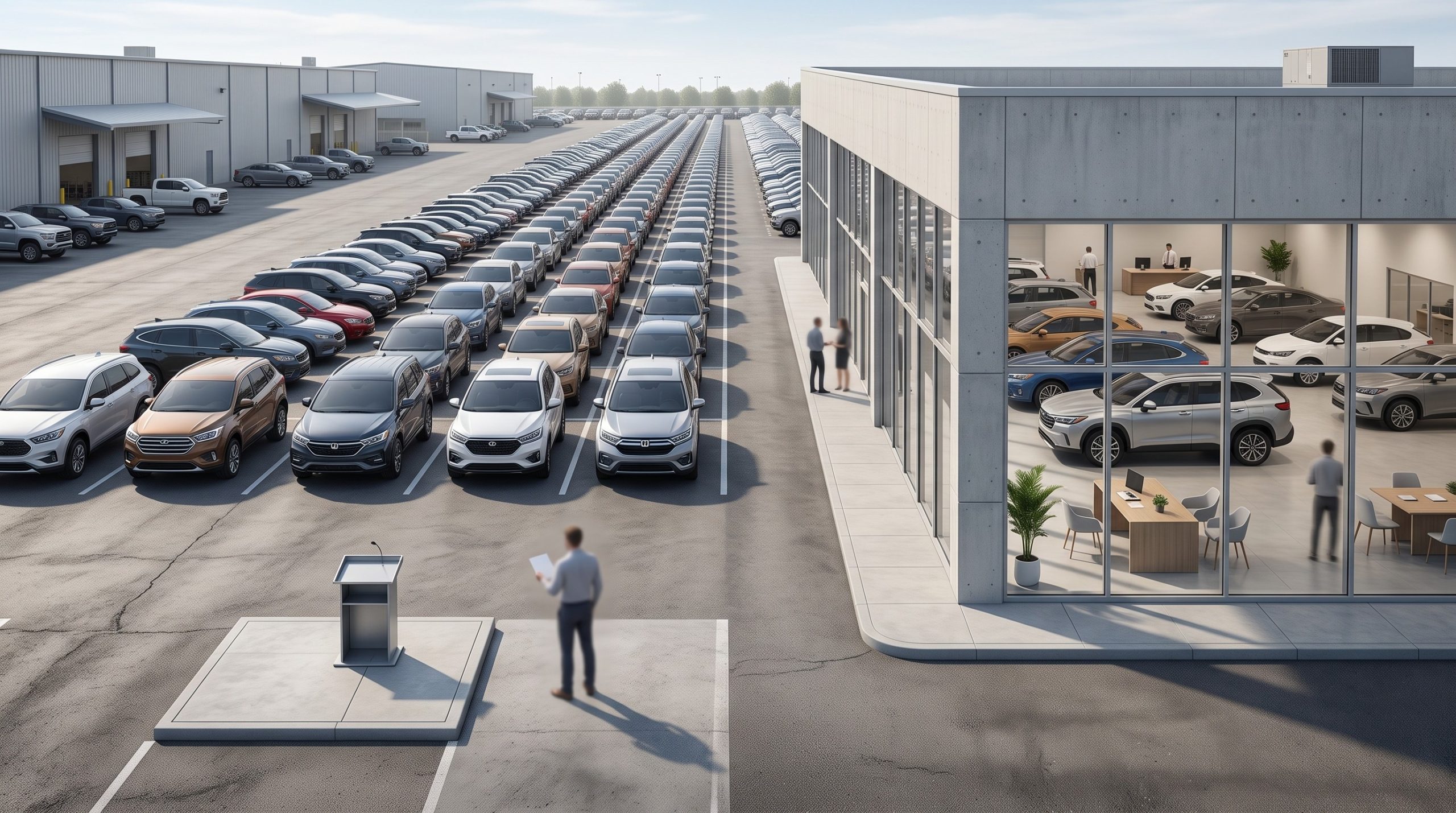
U.S. Car Auction vs. Dealer: Main Differences
| Factor | U.S. car auction | U.S. dealer |
|---|---|---|
| Buying method | Competitive bidding or another auction sale format | Listed price, negotiation, or agreed sale price |
| Buyer access | May be public, restricted, or require specific credentials | Usually designed for retail buyers |
| Price certainty | Final price may remain unknown until bidding ends | Price can usually be discussed before purchase |
| Extra costs | Auction and transaction fees may apply | Dealer fees and optional add-ons may apply |
| Inspection | Can be limited depending on the sale | Independent inspection may be easier to arrange |
| Test drive | May not be available | May be possible, depending on the seller |
| Warranty | Often limited or governed by auction-specific terms | Used vehicles may be sold as-is or with warranty coverage |
| Export concern | Ownership documents still need to support the planned export | The same export-document questions still apply |
The key point is that “auction” and “dealer” describe how you buy the vehicle, not whether the vehicle is automatically good or bad. A carefully researched auction vehicle may be a stronger purchase than a poorly researched dealer vehicle, and the reverse can also be true.
1. Auction Access for International Buyers
There is no single access rule for every U.S. vehicle auction. Some sales are open to the public, while others may be limited by buyer type, location, licensing, or the specific vehicle being offered.
International buyers should confirm access before building a purchase plan. Registration on an auction website does not necessarily mean that the same account can bid on every vehicle or every sale.
- Is this specific sale open to my buyer type?
- Does this vehicle require additional credentials or an approved purchasing method?
- What identification, deposits, or account verification are required before bidding?
- Who will be the buyer of record on the purchase documents?
- When and how will ownership documents be released after payment?
Check the rules for the specific auction, vehicle, buyer type, and location before you bid or send funds. Access policies can vary and may change over time.
2. Compare Total Acquisition Cost
Price is one reason buyers consider auctions, but the winning bid should not be compared directly with a dealer’s advertised price. A more useful comparison is total acquisition cost versus total acquisition cost.
Auction transactions may include buyer fees and other charges. Dealer transactions can also include fees or optional add-ons. For used dealer vehicles, the FTC’s used-car buying guidance recommends getting the total price in writing and reviewing fees and add-ons carefully.
For an international buyer, the comparison may also include inland transportation, export handling, international shipping, destination-country charges, and expected repairs or preparation. Those items vary by vehicle and destination, so a low purchase price alone does not establish the cheaper route.
Compare total cost
Build a simple cost sheet before committing to either source:
- Vehicle purchase price or maximum bid
- Auction or dealer fees
- Inspection cost
- Inland transportation
- Export-related costs
- International shipping
- Expected destination-country charges
- Repair or preparation budget
Use confirmed quotes where practical. This makes it easier to compare two vehicles on the same basis rather than comparing only a bid and a sticker price.
3. Vehicle Condition and Inspection
Vehicle condition can matter more than the buying channel. A low purchase price can lose its advantage quickly if the vehicle needs unexpected repairs, especially when the buyer is overseas and cannot inspect the car personally.
Auction inspection opportunities can be limited by the sale format. A dealer may provide more time to review a vehicle, but dealer inventory should not be assumed mechanically sound simply because it is being sold at retail.
The FTC advises used-car buyers to consider an independent mechanical inspection and notes that a vehicle history report does not replace one. Apply the same due-diligence mindset to auction vehicles whenever independent inspection is available and practical.
- What condition information and photographs are available?
- Can an independent inspection be arranged?
- Does the VIN match the listing, vehicle, and available documents?
- Is a vehicle history report available?
- Are known defects or damage clearly disclosed?
- What are the sale terms if the vehicle differs materially from its description?
The answers to those questions can be more important than whether the vehicle came from an auction or a dealer.
4. Warranty, Title, and Export Readiness
Dealer warranty status
A dealer sale does not automatically mean that a used vehicle includes warranty protection. Depending on the transaction, a vehicle may be sold as-is or with stated warranty coverage. Review the actual sale paperwork and warranty terms instead of assigning value to a warranty that may not apply after export.
For an international buyer, ask whether any coverage remains useful after the vehicle leaves the United States, where covered repairs can be performed, and what documentation would be required to make a claim.
Title and export documents
Buying the vehicle is only part of the transaction. The ownership documentation also needs to support permanent export from the United States and the planned import into the destination country.
U.S. Customs and Border Protection publishes vehicle export documentation procedures for used self-propelled vehicles. The required documents and filing steps depend on the ownership situation, and destination-country import rules can also vary and change over time.
Check documents first
Before paying for a vehicle, confirm:
- what ownership document exists and whose name appears on it;
- whether a lien or other ownership claim is recorded;
- whether the VIN matches the vehicle and documents;
- when the required document will be available; and
- whether the documentation is suitable for the planned U.S. export and destination-country import.
Do not rely only on a short listing label such as “clean” or “salvage.” Review the actual ownership documents and determine whether they work for the complete export and import plan.
5. When Each Buying Route Makes Sense
The best U.S. car auction vs. dealer choice depends on what you value and how much uncertainty you can manage. The individual vehicle still has to pass the same tests for condition, documentation, total cost, and export suitability.
Consider an auction when
An auction can make sense when you understand the access rules, are comfortable with bidding, and can evaluate the available condition information before committing.
- You have confirmed buyer eligibility for the specific sale and vehicle.
- You know your maximum total budget before bidding.
- You understand the auction fees and purchase terms.
- You can handle a vehicle that may need additional inspection, transport, or repair work.
Consider a dealer when
A dealer can make more sense when you value a conventional transaction, more time to review the car, and clearer retail-sale disclosures.
- You want to discuss the price before committing.
- You want easier access to an independent inspection where practical.
- You want the warranty or as-is status disclosed in the sale paperwork.
- You prefer a simpler buying process for a first U.S. vehicle purchase.
With an auction, discipline matters. A winning bid should simply mean the vehicle remained inside the price and risk limits you set before bidding. If the price moves beyond those limits, another vehicle may be the better purchase.
6. U.S. Car Auction vs. Dealer: Which Is Better?
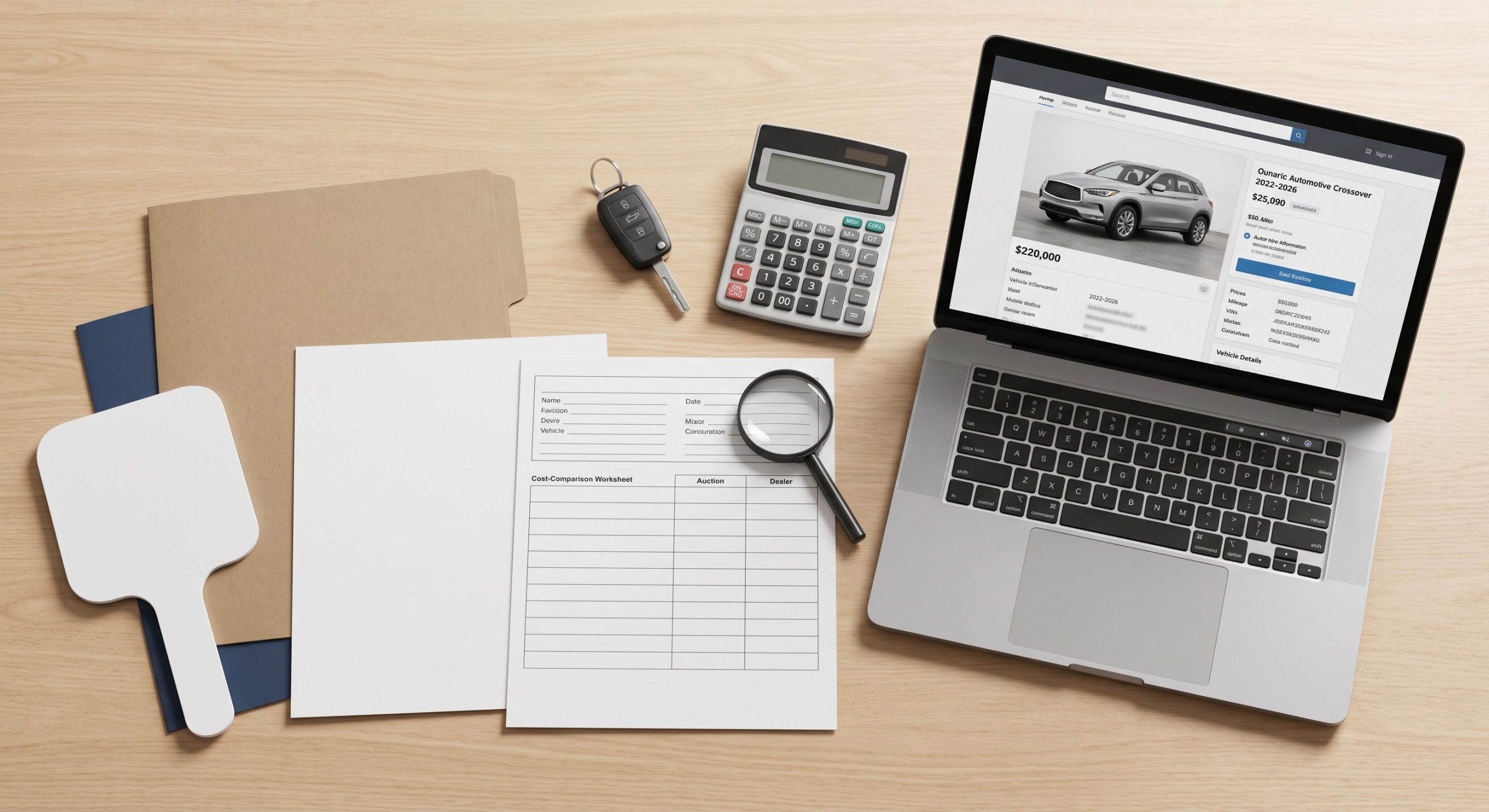
For most international buyers, there is no universal winner. An auction may be attractive when you understand the process and are comfortable with more purchase complexity. A dealer may be attractive when you value a conventional transaction and more time for inspection and paperwork review.
The source of the car should be secondary to the quality of the complete transaction. A vehicle that looks inexpensive can become costly after fees, repairs, transport, document problems, and export-related expenses. A higher initial price can sometimes represent better value when it reduces uncertainty.
7. Pre-Purchase Checklist for International Buyers
Before purchasing from either a U.S. car auction or a dealer, confirm the important facts in writing where practical.
Vehicle
- Correct year, make, model, trim, and important specification
- VIN matches all available records and documents
- Mileage is clearly stated
- Condition information and photographs have been reviewed
- Independent inspection considered where practical
- Vehicle history reviewed
Purchase
- Exact sale price or maximum bid established
- Known seller or auction fees identified
- Payment requirements understood
- Purchase terms read before committing
- Unwanted add-ons excluded from the agreed transaction
Documents and export
- Current ownership document identified
- Title status and any lien or ownership claims investigated
- Expected document-release timing confirmed
- VIN matches ownership documents
- U.S. export-document requirements checked
- Destination-country import eligibility checked
- Transportation and shipping plan considered
- Estimated total landed cost reviewed before purchase
This checklist helps compare vehicles on facts instead of focusing only on the advertised price or the excitement of a winning bid.
8. Start With the Vehicle, Not the Selling Channel
For many international buyers, the most useful first question is not “Where can I find the cheapest auction?” It is “What vehicle am I trying to buy, and what is the safest practical way to source it?”
Define the make, model, year range, condition, budget, destination, and important specifications first. Then compare individual vehicles and buying routes.
If a dealer has the right vehicle with clear documentation and an acceptable total cost, that may be the better choice. If an auction vehicle can be purchased under acceptable access, condition, documentation, and cost terms, the auction may be the better choice instead.
The selling channel should serve the buying decision, not control it.
Explore vehicles for exportFAQ: U.S. Car Auctions vs. Dealers
Sometimes. Auction access depends on the company, sale location, buyer type, and specific vehicle. Some sales may be public, while others can require business credentials or another approved buying method. Confirm eligibility, registration requirements, fees, and document-release rules for the exact vehicle before you bid or send payment.
No. A lower winning bid does not necessarily mean a lower total acquisition cost. Auction fees, inspections, inland transportation, repairs, export handling, and shipping can change the result. Dealer purchases can also include fees and optional add-ons. Compare the complete cost of each individual vehicle using the same cost categories.
Not automatically. A dealer may make inspection and paperwork review easier, but the individual vehicle still needs due diligence. Review the VIN, condition information, history, sale terms, and ownership documents, and consider an independent mechanical inspection where practical. An auction vehicle can also be a sound purchase when those checks are satisfactory.
Not all used dealer vehicles include warranty coverage. A vehicle may be sold as-is or with stated coverage, depending on the transaction and applicable rules. Review the actual warranty disclosure and sale documents. International buyers should also confirm whether any coverage would remain useful after the vehicle is exported from the United States.
Check the vehicle identity and condition, total purchase cost, VIN, ownership documents, title status, any liens, document-release timing, and the requirements for U.S. export and destination-country import. Also plan inland transportation, shipping, and a repair budget. Export and import requirements vary by situation and can change over time.