The cheapest car to buy in the United States is not always the cheapest car to import.
For an international buyer, the useful comparison is the complete estimated cost: the vehicle, transport inside the United States, transaction and export handling, international shipping, destination charges, local requirements, and any repairs you expect to make.
Core cost principle
Compare the total import budget, not the advertised vehicle price alone. A lower purchase price can be offset by higher transport, documentation, destination, or repair costs.
Start With the Total Import Budget, Not the Vehicle Price

When comparing U.S. vehicles, use the same cost framework for every option. A practical planning formula is:
Planning formula
Vehicle price + U.S. transport + transaction costs + export handling + international shipping + destination charges + local requirements + expected repairs = estimated total budget
Not every cost applies to every vehicle or destination, and the amounts can vary substantially. Duties, taxes, eligibility, registration, shipping arrangements, and other local requirements are destination-specific, so a universal “add this percentage” rule is rarely a reliable way to compare vehicles.
Use the same complete framework for each car, then replace estimates with confirmed quotes and current destination requirements before you commit.
1. The Purchase Price Is Only the Starting Point
Suppose you find two similar vehicles and one is clearly cheaper. It is natural to assume that the lower-priced car will also be cheaper to import, but the difference can disappear after the other costs are added.
A lower-priced vehicle might:
- be farther from the likely departure point;
- require more difficult transport or loading;
- need more repairs;
- need additional ownership or export-document work;
- have characteristics that change destination-country taxes, eligibility, or compliance costs.
A slightly more expensive vehicle may therefore cost less to move through the complete process. The purchase price matters; it just should not be considered alone.
2. Where the Car Is Located in the U.S. Matters
International shipping is only one part of vehicle transportation. Before export, the vehicle must first reach the appropriate departure or handling location.
Two cars with similar purchase prices can have different inland-transport costs if one is much farther from the likely export point. Pickup accessibility can matter too, especially for vehicles at remote locations or vehicles that cannot move under their own power.
When comparing vehicles, check the pickup location and likely inland-transport requirement at the same time as the price.
3. Vehicle Size and Condition Can Affect Transportation
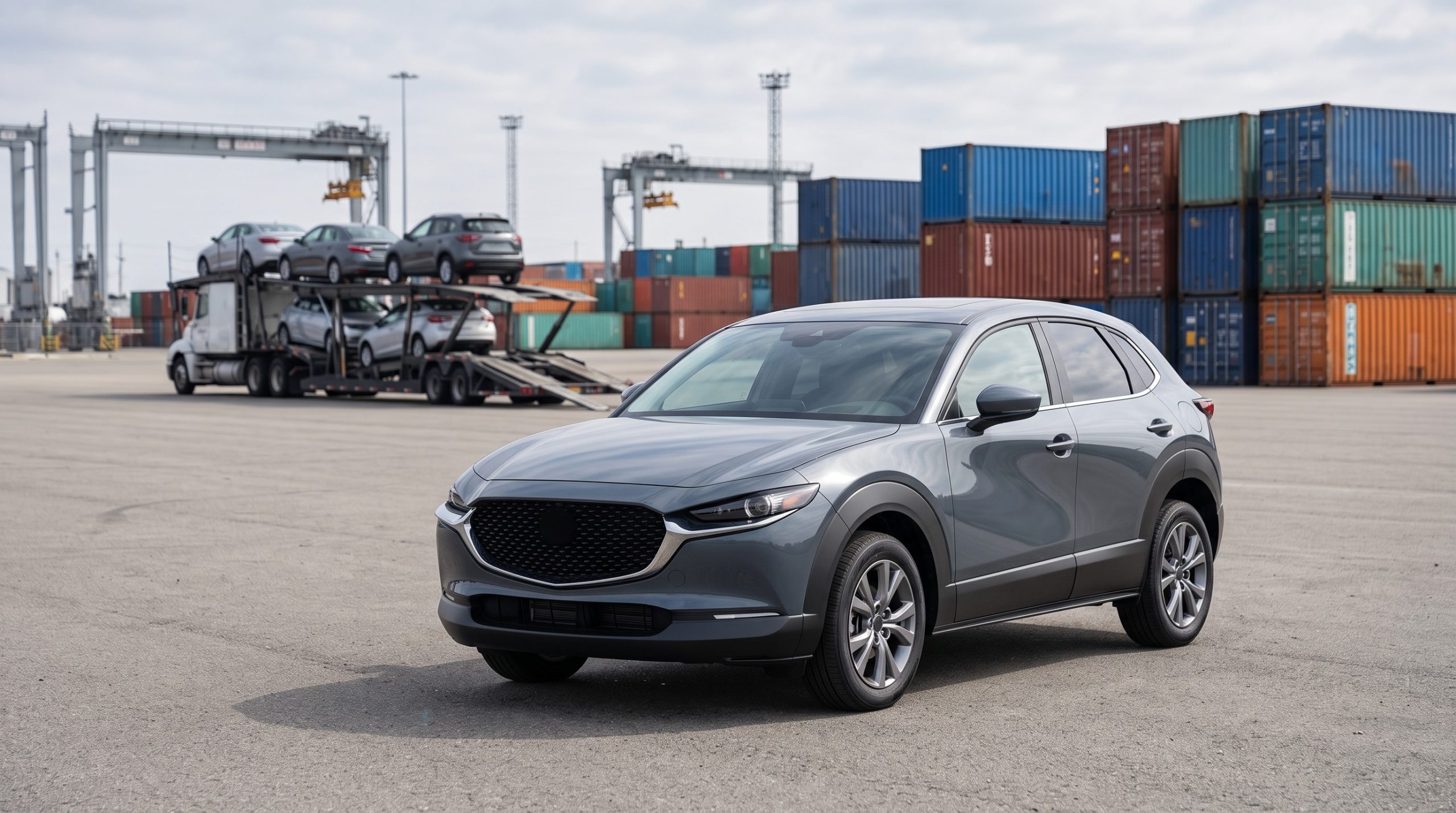
Not every vehicle is equally easy to move. A small running sedan and a large non-running vehicle may need different transport, loading, and shipping arrangements.
Factors that can affect the transport plan include:
- vehicle dimensions and category;
- whether the vehicle runs and can move under its own power;
- pickup accessibility;
- loading or special-handling requirements;
- the route and available international shipping method.
A cheaper vehicle that is difficult to move can lose some or all of its initial price advantage. Compare actual transport information for the specific cars you are considering whenever possible.
4. Documentation Problems Can Turn a Bargain Into a Problem
A very low price deserves a closer look at the vehicle’s ownership and supporting documents. A car can be attractive on price and still be a poor choice if the documentation does not fit the intended purchase and export process.
U.S. Customs and Border Protection publishes specific documentary and presentation requirements for used self-propelled vehicles, with requirements depending on the vehicle’s documentary status and export situation. For a typical U.S.-titled used vehicle, the title is a core part of the export documentation. See CBP’s vehicle-export requirements for current official guidance.
The practical lesson is simple: do not judge export suitability from the advertised price alone. Confirm that the vehicle can move through the required purchasing and export process before you commit.
5. Destination-Country Costs Can Change the Comparison
The same U.S. vehicle can produce a very different final budget depending on the destination country. Buyers may need to account for items such as:
- customs duties and import taxes;
- port, terminal, or handling charges;
- customs clearance;
- inspection or compliance requirements;
- registration costs;
- other local fees or vehicle-specific requirements.
How those costs are calculated also varies by country. Vehicle value may matter, while some destinations may also use characteristics such as age, engine specification, fuel type, origin, or vehicle classification.
Before buying
Confirm current import eligibility, duties and taxes, clearance costs, and local registration or compliance requirements with authoritative sources for your destination. Rules can change and may be vehicle-specific.
6. Vehicle Condition Can Matter More Than a Small Price Difference
A cheap car is not cheap if it immediately requires expensive work. When comparing vehicles, look beyond mileage and asking price to the condition information that is actually available.
- Mechanical and body condition
- Known damage or missing parts
- Warning lights or reported faults
- Tire and maintenance needs
- Vehicle history, where available
The goal is not necessarily to find a perfect vehicle. It is to understand what you are buying and allow for realistic repair risk. A vehicle that costs more upfront but needs less work may still produce the lower total budget.
7. Small Extra Costs Can Add Up
Large expenses such as the vehicle and international shipping receive most of the attention. Smaller transaction and arrival costs are easier to overlook.
Depending on the transaction and destination, you may also encounter expenses related to:
- bank or payment charges;
- currency conversion;
- insurance, where applicable;
- document processing and handling;
- storage caused by delays;
- local transport after arrival.
One small charge may not change the decision. Several together can. Include them in the estimate so both vehicles are being compared on the same basis.
A Simple Example: Cheaper Car vs. Cheaper Import
Consider two hypothetical cars. The table does not assign invented dollar amounts; it shows the information that can change the result.
| Cost factor | Car A | Car B |
|---|---|---|
| Purchase price | Lower | Higher |
| U.S. pickup location | Farther away | Closer |
| Running condition | Uncertain | Running |
| Documentation | Needs more checking | Clearer situation |
| Repair risk | Higher | Lower |
| International shipping | Needs confirmation | Needs confirmation |
| Destination costs | Must be calculated | Must be calculated |
If you look only at the first row, Car A appears cheaper. Once you consider the complete process, the answer is no longer obvious. Car B may require less money to transport, prepare, and put into use.
This is the central idea: compare vehicles by realistic total import cost, not by purchase price alone.
How to Compare Two U.S. Cars Before Buying
Collect the same information for both vehicles before deciding which one is cheaper overall.
Vehicle
- Purchase price, year, make, and model
- Vehicle size and type
- Mileage and running condition
- Known damage, faults, or repair needs
Location and Transport
- Current pickup location
- Expected U.S. inland transportation
- Likely departure point
- Available international transport method
Transaction and Export
- Applicable transaction or processing charges
- Ownership and document status
- Export handling requirements
Destination
- Destination country and receiving location
- Current import eligibility
- Customs duties, taxes, clearance, and port charges
- Inspection, compliance, and registration requirements
Other Costs
- Insurance, if used
- Currency conversion or payment costs
- Local transport after arrival
- Expected repairs
- A reasonable allowance for unexpected expenses
You may not know every number immediately. The purpose of the checklist is to identify what still needs to be confirmed before the low purchase price influences the decision too strongly.
What Does “Cheapest” Really Mean?
For an international buyer, “cheapest” should not simply mean the car with the lowest U.S. price.
A better definition is the suitable vehicle with the lowest realistic total cost after purchasing, transporting, importing, and preparing it for its intended use.
That changes the buying question from “Which car has the lowest price?” to “Which suitable car gives me the best total result within my budget?”
Compare the Complete Cost Before You Commit
Buying a vehicle from the United States can involve several stages between finding the car and receiving it in your country. The advertised price tells you only what the vehicle costs at the start of that process.
Before choosing between two vehicles, compare the vehicle + its location + its condition + transport + destination costs + local requirements.
The lowest-priced U.S. car may still be the best option. The important difference is that you will know it after comparing the complete picture, not simply because its advertised price was lowest.
Get a Free Import QuoteFrequently Asked Questions
Start with the vehicle purchase price, then consider U.S. inland transportation, transaction and export handling, international shipping, destination-country duties and taxes, clearance, local compliance or registration, and any expected repairs. The exact items and amounts depend on the vehicle and destination.
Not necessarily. A lower-priced vehicle can cost more overall if it is expensive to transport, difficult to handle, needs significant repairs, has documentation complications, or produces higher costs under the destination country’s rules. Compare the complete estimated budget instead of the vehicle price alone.
No. Vehicle size can affect transportation, but it is only one factor. Route, departure and destination points, shipping method, vehicle condition, and current transport arrangements can also affect the quote. The best approach is to compare actual transport information for the specific vehicles you are considering.
You can usually build a useful estimate, but some amounts may remain variable until the vehicle, route, shipping quote, and destination requirements are confirmed. Import duties, taxes, eligibility, registration requirements, and other local costs should be checked using current information for your destination before purchase.