If you are comparing new vs. used cars from the USA for export, the best choice depends on more than purchase price. Condition, history, warranty terms, local service support, import eligibility, and the full cost of getting the vehicle to your destination all matter.
A new car gives you a cleaner starting point: no previous owner use and usually access to the latest model-year features. A used car often gives you a lower entry price and a wider choice of years, trims, engines, and configurations.
For an international buyer, neither option is automatically better. The stronger purchase is the specific vehicle that fits your total budget, destination rules, maintenance access, and tolerance for condition risk.
New vs. Used Cars from the USA at a Glance
| Factor | New Car | Used Car |
|---|---|---|
| Purchase price | Usually higher | Usually lower |
| Previous use | No previous owner use | Condition and previous use need checking |
| Vehicle history | Minimal ownership history | History should be researched before purchase |
| Inspection | Verify specification and condition | Independent inspection is especially valuable |
| Warranty | New-vehicle coverage may apply, subject to its terms | Coverage varies by vehicle and seller |
| Technology | Usually the latest available for that model | Depends on model year and specification |
| Selection | Mainly current models | Wider range of years and configurations |
| Depreciation | More early depreciation may remain ahead | Some initial depreciation has already occurred |
| Maintenance uncertainty | Generally lower at the beginning of ownership | Depends on age, mileage, use, and maintenance |
| Destination suitability | Must be checked for the destination | Must be checked for the destination |
For ordinary U.S. buyers, a new-versus-used comparison often centers on price, features, depreciation, warranty, and maintenance. When comparing new vs. used cars from the USA for international purchase, add import eligibility, local serviceability, parts availability, and destination costs to the decision.
Key Takeaways
Choose a new car when condition certainty, current specifications, and a predictable starting point matter more than the lowest purchase price.
Choose a used car when value and selection matter more and you are prepared to verify history, condition, maintenance, and inspection results carefully.
With either option, confirm that the exact vehicle can be imported, registered, serviced, and supported at the destination before you commit to the purchase.
Advantages and Trade-Offs of Buying New
A new vehicle can make sense when you want the most predictable starting point possible and your budget can support the higher purchase price.
1. You know how the vehicle has been used
A new vehicle does not come with years of previous driving, maintenance decisions, accident history, or ownership patterns to investigate. That removes one major source of uncertainty.
You should still confirm the exact model, trim, equipment, specification, and condition before purchase, especially when the vehicle will be exported.
2. You can get newer safety and technology features
Current model years can include updated safety systems, infotainment, driver-assistance features, engines, batteries, and other improvements. Whether those features matter depends on the vehicle and how you plan to use it.
More technology can also make local diagnostics, parts supply, software support, and specialist repair capability more important. Newer is not automatically better for every destination.
3. Early maintenance may be easier to predict
A new vehicle has not accumulated normal long-term wear from previous ownership. That can reduce uncertainty around brakes, suspension, cooling systems, interior wear, and other age-related items during the early ownership period.
4. Warranty coverage may be available
A new vehicle may come with manufacturer warranty coverage, but an international buyer should not assume that U.S. warranty coverage applies in another country. Geographic, servicing, ownership, and other conditions can affect whether coverage is useful after export.
Warranty check
Read the written warranty terms before buying and confirm where warranty work can actually be performed. A warranty has limited value if the required service network or authorization is not available in your destination country.
5. The higher price is only part of the trade-off
A new version of a vehicle will usually cost more than an otherwise comparable used version. For an international buyer, that difference matters because the vehicle price is only one part of the total budget.
New vehicles also have more early depreciation ahead, and a brand-new U.S.-market specification may still be inconvenient or ineligible at your destination. Confirm registration rules, parts access, service support, fuel or charging needs, and any technical requirements before buying.
Advantages of Buying Used from the USA
Used vehicles can offer strong value, especially when the buyer knows what to verify and leaves room in the budget for maintenance or repairs.
1. A lower purchase price can expand your options
Used cars generally cost less than comparable new vehicles. That can let you spend less overall, choose a higher trim, move into a different vehicle class, or reserve more of the budget for transportation and destination costs.
The cheapest listing is not necessarily the best value. A slightly more expensive used vehicle with better condition and maintenance can be a stronger purchase than the lowest-priced option.
2. You can choose from more model years
The used market gives buyers access to vehicles that are no longer available new. That can be useful when you want a particular generation, engine, trim level, discontinued model, or configuration that fits a specific budget.
- a particular generation or body style
- a specific engine or powertrain
- a trim level or equipment package that is no longer offered
- a discontinued model
- a configuration that better fits your budget or local service network
For international sourcing, that wider selection can make it easier to find the exact combination that suits your destination and ownership plan.
3. Some initial depreciation has already occurred
A previous owner has already absorbed part of the vehicle’s early depreciation. That can make a well-chosen used car attractive when purchase value matters more than having the newest model year.
Resale conditions vary widely by country and vehicle, so local demand should be considered before treating depreciation as a guaranteed saving.
Main Risks When Buying Used
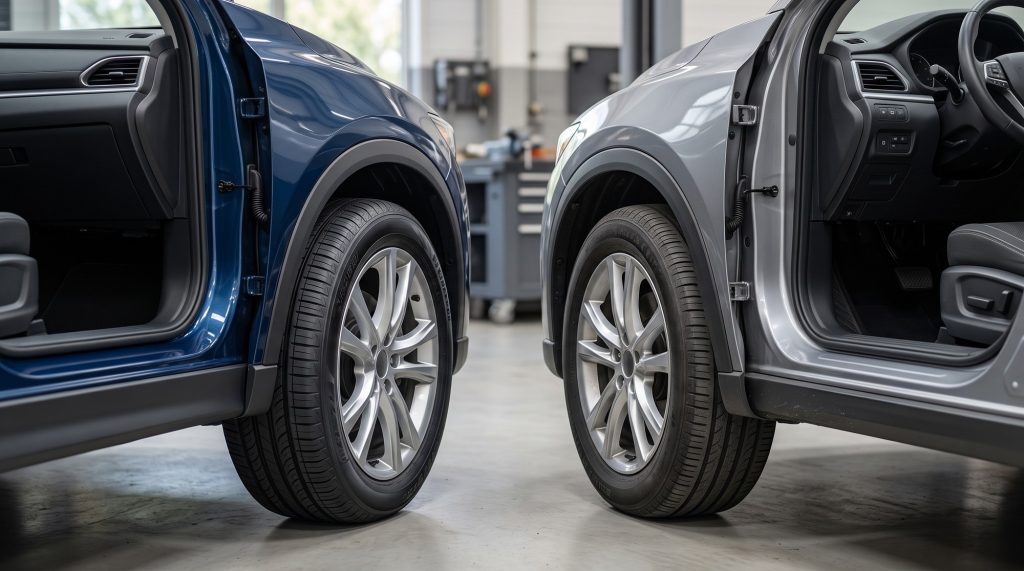
The biggest difference with a used vehicle is uncertainty. Two cars with the same year, make, model, and mileage can have very different histories and mechanical conditions.
Condition and maintenance matter
Mileage is useful, but it does not tell the whole story. Review the vehicle as a complete package rather than ranking used cars by price and odometer reading alone.
- maintenance history when available
- visible wear and interior condition
- mechanical condition
- previous damage or repairs
- how the vehicle appears to have been used
- service records when available
- repairs or maintenance that may be needed soon
History reports and inspections serve different jobs
A vehicle history report can reveal useful title and event information, but it should not be treated as a complete mechanical inspection. When practical, combine available history research with an independent inspection before purchase.
That matters even more when you are buying from another country. Once a vehicle is paid for and moved into the international transport process, solving an unexpected condition problem can become more difficult.
Check recalls and written warranty terms
Check the VIN for open safety recalls as part of your research. Also review any written warranty or dealer terms that apply to the used vehicle, including whether it is sold with limited coverage or without dealer warranty where permitted.
If coverage exists in the United States, confirm whether it can be used at your destination and where repairs can be performed. Do not pay extra for warranty coverage unless you understand how it will work after export.
Why International Buyers Should Compare Total Cost

When comparing new vs. used cars from the USA, the advertised vehicle price is only one line in the budget. A lower-priced vehicle can still become the more expensive choice if it needs repairs, additional inland transport, or difficult-to-source parts.
Compare the whole purchase
Depending on the vehicle, transaction, and destination, your budget may need to account for:
- vehicle purchase price
- transportation within the United States
- international transportation
- port or handling charges
- destination taxes or duties where applicable
- inspection, compliance, or registration work
- immediate repairs or maintenance
- parts or modifications needed after arrival
The exact items, amounts, and requirements vary by destination and can change over time. Check destination-country rules before you buy rather than after the vehicle has already been purchased.
Five Questions to Ask Before You Buy
1. What is my real total budget?
Start with the amount you can spend on the complete transaction, not only the vehicle. A cheaper used car may leave more room for transport and maintenance, while a more expensive new car may reduce some condition uncertainty but require a larger initial budget.
2. Can this exact vehicle be imported and registered?
Check the actual year, make, model, engine or powertrain, and specification. Do not assume every vehicle sold in the United States can be imported or registered everywhere. Destination-country customs, transport, registration, or other relevant authorities should be the final source for local requirements.
3. Can I maintain the vehicle locally?
A vehicle can be attractive in the United States but difficult to own somewhere else. Before buying, check whether local workshops can service it and whether common parts, diagnostics, specialist components, and manufacturer support are realistically available.
- Are common service and repair parts available?
- Can local workshops service this engine, transmission, battery, or powertrain?
- Is diagnostic support available?
- Are specialist components difficult to obtain?
- Is there useful manufacturer or dealer support for this specification?
4. How much condition risk will I accept?
If you want as little uncertainty about previous use as possible, a new vehicle may suit you better. If you are comfortable reviewing history, arranging an inspection, and comparing condition carefully, the used market gives you more choices.
5. How long will I keep the vehicle?
Think beyond the purchase. Consider maintenance, parts, fuel or energy needs, resale demand, and how your vehicle needs may change. The best vehicle is not simply the one that costs the least today; it is the one that makes sense through the period you expect to own it.
Which Buyer Fits Each Option?
A new car may fit you better if:
- you want the latest model and technology
- minimizing uncertainty about previous use is important
- your total budget can support the higher purchase price
- you have confirmed local service and parts support
- you have verified any warranty coverage that matters to you
- the exact vehicle meets your destination’s requirements
A used car may fit you better if:
- purchase value is a major priority
- you want more model-year and trim choices
- you are prepared to research vehicle history
- an independent inspection can be arranged when practical
- you are comfortable evaluating mileage, maintenance, and wear
- you have allowed room in the budget for possible maintenance
Is a Late-Model Used Car a Good Middle Ground?
For many buyers, the choice does not have to be between a brand-new vehicle and an old one. A late-model used car can provide a middle ground.
You may get newer technology and relatively low wear while avoiding the purchase price of a brand-new equivalent. The same used-car checks still apply: verify condition, history, maintenance, warranty terms, and destination suitability.
Do not assume a newer used vehicle is automatically in excellent condition. Evaluate the specific vehicle rather than relying only on its model year or mileage.
Used-Car Checklist for International Buyers
Before committing to a used vehicle from the United States, work through the transaction in a consistent order.
- Confirm the exact year, make, model, trim, engine, or powertrain.
- Verify the VIN against the vehicle information provided.
- Review available vehicle-history information.
- Arrange an independent inspection when practical.
- Check for open safety recalls.
- Review maintenance information when available.
- Confirm what warranty, if any, applies.
- Check whether that warranty is useful in your country.
- Confirm destination-country import and registration requirements.
- Build a total budget beyond the advertised vehicle price.
- Confirm the ownership and export documents required for the transaction.
- Do not send payment until you understand the transaction and the party you are paying.
U.S. vehicle-export documentation requirements depend on the specific transaction and documentation status. Requirements can change, so verify the current rules for the vehicle before proceeding rather than assuming that the words “new” or “used” in an advertisement determine what is required.
How to Choose Between New vs. Used Cars from the USA
For most international buyers, the decision comes down to certainty versus value. A new car can offer a more predictable condition and current features, while a used car can offer a lower entry price and much more selection.
Neither option is automatically better. When choosing between new vs. used cars from the USA, look for the vehicle that fits your total budget, can be imported and registered at your destination, has a condition you understand, can be maintained locally, and supports the reason you are buying it.
Instead of asking only whether new or used is cheaper, ask which specific vehicle gives you the best balance of condition, cost, suitability, and long-term ownership.
Explore Export Auto USAFrequently Asked Questions
A used vehicle usually has a lower purchase price than a comparable new vehicle, but the total transaction may not always cost less. Repairs, maintenance, U.S. inland transportation, international shipping, destination charges, taxes or duties where applicable, and local compliance work can all change the final amount. Compare the complete budget, not only the advertised price.
No. Mileage is useful, but condition, maintenance, previous use, age, inspection findings, and available history also matter. A well-maintained vehicle with moderately higher mileage can be a better purchase than a lower-mileage vehicle with poor maintenance or unresolved problems. Evaluate the specific vehicle as a complete package before deciding.
No. A vehicle history report is an important research tool, but it is not a complete mechanical inspection and may not capture every event or condition issue. When practical, combine available history information with an independent inspection, VIN verification, recall research, and a review of maintenance information before you commit to the purchase.
Do not assume that it will. Warranty usefulness depends on the manufacturer’s or seller’s written terms, including any geographic, servicing, ownership, or authorization conditions. Before choosing a vehicle because of its warranty, confirm whether coverage applies at your destination and where approved warranty repairs can actually be performed after the vehicle is exported.
It can be. A late-model used car may offer many current features and relatively low wear at a lower purchase price than a new equivalent. It is still a used vehicle, so condition, history, maintenance, inspection findings, warranty terms, and destination suitability should all be checked before purchase rather than assumed from age or mileage alone.