Buying a car from the USA can give international buyers access to a wide selection of vehicles, but distance makes verification more important. The safest approach is to confirm the exact vehicle, seller, documents, condition, and destination requirements before you commit.
You may not be able to see the vehicle in person. You may be working with sellers, inspectors, transport companies, and export specialists in different locations, while your destination country has its own import and registration requirements.
Many expensive problems can be reduced by asking the right questions before you commit to the purchase. This guide explains nine common mistakes international buyers should avoid when considering a vehicle from the United States.
Core safety rule
Verify the vehicle first and organize the process before money changes hands. Do not buy first and investigate later.
Before buying a car from the USA: the short answer
Before buying a car from the USA, check destination eligibility, confirm the VIN and vehicle details, review available history, understand the vehicle’s present condition, and verify the seller.
Then set a realistic budget, confirm ownership and export-document responsibilities, and resolve any unanswered question that could change your decision.
1. Checking import rules only after buying
One of the biggest mistakes is finding an attractive vehicle, buying it, and only then asking whether it can be imported and registered in the destination country. Import rules vary by destination and can change over time.
U.S. Environmental Protection Agency guidance for exported U.S.-version vehicles tells exporters to check the destination country’s requirements. A vehicle being available for sale in the United States does not automatically mean it is suitable for your destination.
A better approach
Before committing to a vehicle:
- Identify the exact year, make, model, engine, trim, and VIN.
- Check current rules with the customs, transport, registration, or other appropriate authority in your destination country.
- Confirm whether any restrictions or certification requirements affect that specific vehicle.
- Ask what documents will be needed when the vehicle arrives.
- Resolve material uncertainties before sending money or completing the purchase.
Do not rely only on social media, an old forum post, or information written for another country.
Important
This article provides general buying guidance. It does not determine whether a particular vehicle is eligible for import into a specific country; current requirements should be checked for the exact vehicle and destination.
2. Looking at price instead of the exact vehicle
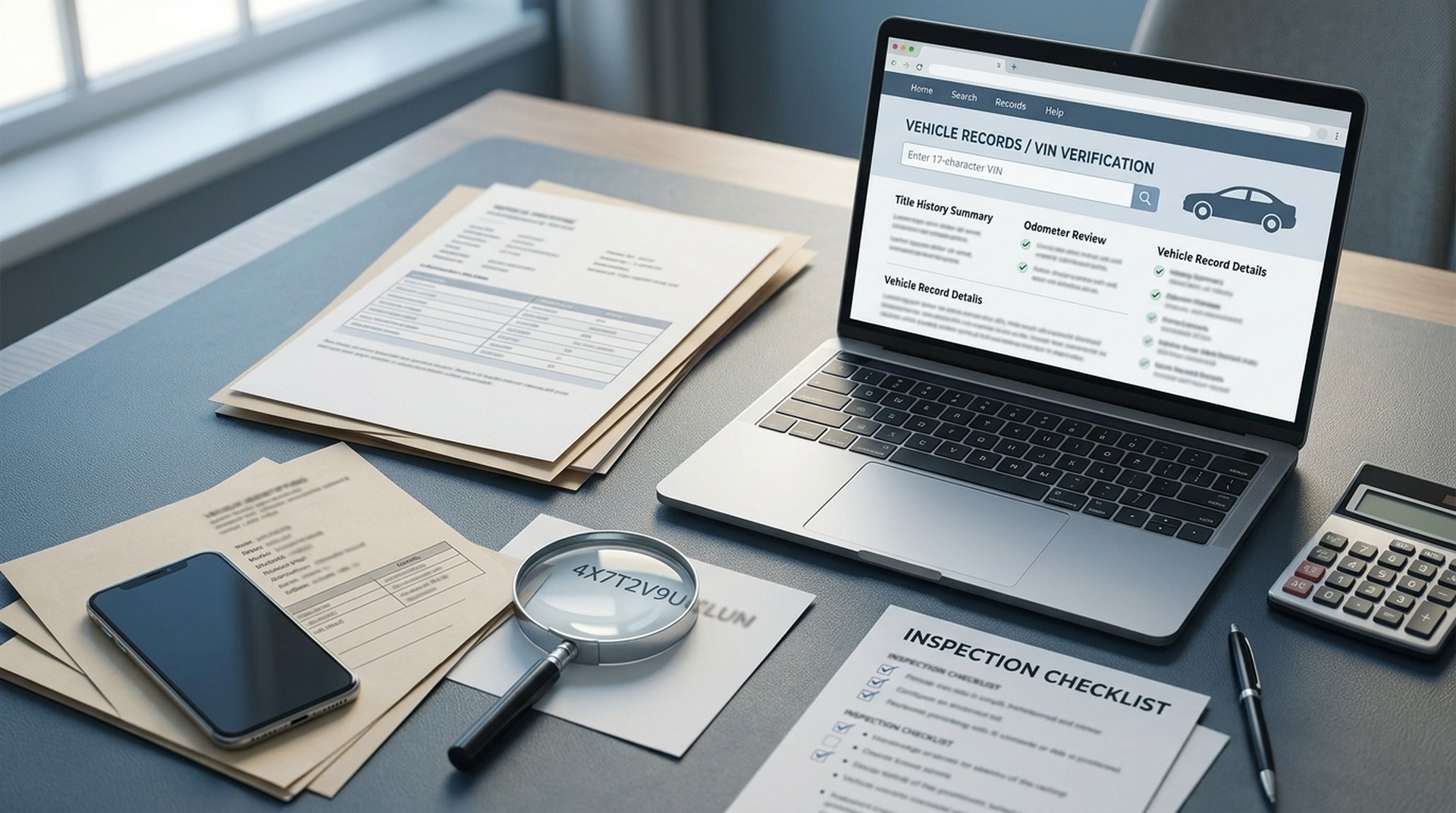
International buyers often search by year, make, model, mileage, and price. Those details are useful, but two cars that look almost identical online can have very different histories, equipment, mechanical condition, ownership documentation, or previous damage.
Before making a decision, verify the specific vehicle, not only the model or advertised price.
Check the VIN carefully
The VIN, or Vehicle Identification Number, identifies the individual vehicle. Use it to compare information across:
- the listing;
- available ownership records;
- vehicle history reports;
- inspection documents;
- photographs; and
- other records supplied for the vehicle.
If important information does not match, investigate before continuing. Do not assume that a stock photo, model description, or seller summary represents everything you need to know about the actual car.
3. Skipping the vehicle history check
A clean-looking car can still have a complicated history. The U.S. Department of Justice’s National Motor Vehicle Title Information System, or NMVTIS, gives consumers access to certain title, brand, odometer, theft, insurance, salvage, and total-loss information reported to the system.
That makes a history check an important part of researching a used U.S. vehicle, but it is only one part of the decision.
What to look for
Pay attention to information that does not match the listing, including:
- mileage differences;
- title-brand information;
- previous total-loss or salvage records;
- unexpected ownership information; or
- other significant history that needs further investigation.
A title brand can include terms such as salvage, junk, or flood. A brand does not by itself determine whether a vehicle can be imported into another country; that question must be checked separately against the destination’s current rules.
Use more than one source
Vehicle-history information has limitations. NMVTIS and commercial history reports can show useful recorded events, but they do not provide a complete repair or condition history for every vehicle.
Use history information as one part of your due diligence, not as your only source.
4. Treating a history report as an inspection
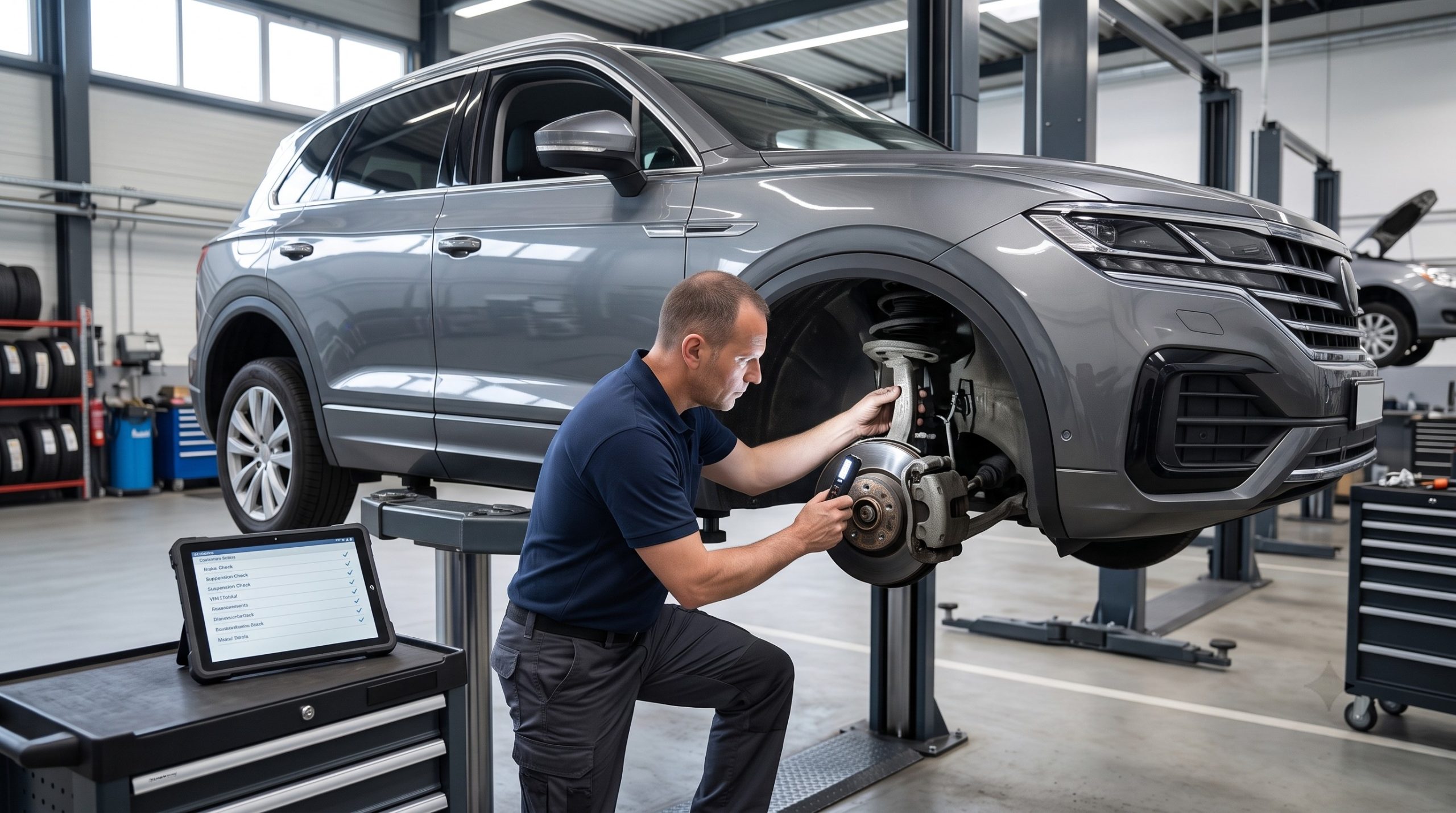
A history report and a vehicle inspection answer different questions. A history report tells you what has been recorded about the vehicle; an inspection helps determine what condition the vehicle is in now.
Federal Trade Commission used-car guidance and NMVTIS consumer guidance both treat an independent inspection as a separate step from a history report. That distinction matters even more when you are buying from another country and cannot easily examine the car yourself.
What an inspection can show
Depending on the type and depth of inspection, a qualified independent inspector or mechanic may be able to evaluate areas such as:
- engine and drivetrain condition;
- warning lights and visible leaks;
- suspension or steering concerns;
- tires and brakes;
- visible accident repairs or corrosion;
- electrical equipment; and
- differences between the listing and the vehicle’s actual condition.
Ask what an inspection covers before ordering it. A basic visual inspection is not the same as a detailed mechanical inspection.
Check for open recalls
The U.S. National Highway Traffic Safety Administration provides a VIN-based recall lookup that can show certain unrepaired safety recalls associated with a vehicle.
A recall search is another useful check, but it should not replace a vehicle inspection or history review.
5. Not defining your maximum budget
For an international purchase, the advertised vehicle price should not be the only number controlling your decision. Several separate stages can follow after the vehicle itself is bought.
Exact costs vary by transaction, vehicle, location, service providers, and destination. Instead of assuming the purchase price represents the complete project cost, create a budget before you commit.
Separate the budget into stages
At minimum, think about:
- the amount you are prepared to spend on the vehicle;
- inspection or due-diligence expenses;
- transportation and export arrangements;
- destination-country requirements; and
- any work the vehicle may need after purchase.
Obtain current information or quotes from the appropriate providers rather than relying on an old online estimate. A low purchase price is not automatically a good deal if important questions remain unanswered.
6. Trusting the seller without verification
Distance can make fraud harder to recognize. A professional-looking website, advertisement, email address, or social media account is not enough by itself to prove who is behind a transaction.
Before sending funds, verify the seller or company independently.
Useful checks include
- confirming the company’s legal or business identity where possible;
- checking that contact details are consistent;
- confirming the vehicle actually exists;
- matching the VIN to the vehicle being offered;
- getting important terms in writing;
- questioning unexplained changes in instructions; and
- independently verifying sensitive transaction details through a known contact channel.
Before you pay
Be particularly careful when someone creates artificial urgency or pushes you outside the normal process of a legitimate platform or business.
The important point is to verify who is receiving the money, why, and under what documented agreement before proceeding. No single payment method proves that a vehicle transaction is safe.
7. Buying a car from the USA and exporting it are separate steps
Purchasing a vehicle creates one set of responsibilities. Exporting it from the United States creates another.
U.S. Customs and Border Protection has separate requirements for exporting used self-propelled vehicles, including ownership-document and advance export-document requirements. The exact procedure can vary with the circumstances and port.
For an international buyer, the practical lesson is not to memorize customs procedures from a general article. It is to ask before purchasing:
- Who will handle the U.S. export process?
- Has the vehicle’s ownership documentation been reviewed?
- Are there document issues that need to be resolved before export?
- Which party is responsible for each step?
- What information is still missing?
Do not assume that because a seller can sell you a car, the seller is also handling every part of its international export. Detailed procedures, document timing, and ownership requirements can vary, so check current official requirements before treating general guidance as operational instructions.
8. Failing to record the vehicle’s condition
When you are thousands of kilometers away from the car, good documentation matters. Before the vehicle changes hands or moves from its current location, ask for a clear record of its condition.
Depending on the purchase, that record may include:
- photographs of all exterior sides;
- interior photographs;
- the dashboard and odometer;
- wheels and tires;
- visible damage;
- the engine compartment;
- keys and accessories supplied with the vehicle; and
- additional photos of anything identified during inspection.
If video is available, it can add context that a few listing photographs may miss. The goal is not to create a perfect record of every possible defect; it is to reduce uncertainty and make sure everyone is discussing the same vehicle in the same condition.
9. Rushing because the deal looks urgent
With a long-distance purchase, an attractive listing can create pressure to act immediately. Urgency becomes dangerous when it causes you to skip checks you would normally consider important.
Before committing, ask:
- Do I have the correct VIN?
- Have I checked the available vehicle history?
- Do I understand the vehicle’s condition?
- Have I confirmed my destination requirements?
- Do the seller and transaction details make sense?
- Have important promises been provided in writing?
- Is there an unresolved question that could change my decision?
If the answer to an important question is still unclear, getting that answer is usually more valuable than rushing to secure the vehicle. A good purchasing decision should still make sense after the excitement of finding the car has passed.
Pre-purchase checklist for international buyers
Before buying a vehicle from the United States, use this checklist:
- Confirm the exact year, make, model, trim, and VIN.
- Check current import requirements in the destination country.
- Review an appropriate vehicle history report.
- Investigate important title-brand or mileage information.
- Arrange an independent inspection when appropriate.
- Check for relevant open recalls.
- Review detailed, recent photos of the actual vehicle.
- Set your maximum purchase budget before negotiating.
- Verify the seller or business independently.
- Get important transaction details in writing.
- Confirm who will handle the U.S. export process.
- Resolve ownership-document questions before purchase.
- Keep copies of important records and communications.
- Do not proceed while a material question remains unanswered.
You do not need to know everything about the international vehicle trade before buying a car. You do need a process that prevents important questions from being ignored.
Buying a car from the USA with fewer surprises
The purchase is easier to manage when you separate the decision into clear checks: eligibility, VIN, history, condition, seller, budget, documents, and export responsibilities. Resolve the questions that could change your decision before you commit.
If you want help coordinating a U.S. vehicle purchase and the export process, start with ExportAutoUSA and discuss the exact vehicle and destination before moving forward.
Get Help Buying a Car from the USAFrequently asked questions
Yes. International buyers can use available U.S. vehicle-history resources before deciding whether to purchase a used vehicle. NMVTIS-authorized providers and other commercial services may show title, brand, odometer, insurance, salvage, or other recorded information. No history database is complete enough to replace an independent inspection when the vehicle’s present condition matters.
It is safer to check the destination-country requirements first. Rules can vary by country, vehicle, age, specification, and current policy, and they can change over time. Confirm the exact vehicle details and VIN, then use the appropriate government authority or a qualified professional for the destination before you send money or complete the purchase.
No. A history report shows information recorded in the databases used by that report. It does not prove that the vehicle has no mechanical problems, unreported damage, missing maintenance, or current defects. Use the report alongside VIN verification, recent photos, seller checks, and an independent inspection when condition is important to your decision.
There is no single check that covers every risk. A safer decision combines destination requirements, VIN verification, vehicle history, present condition, seller verification, documentation, budget, and a clear export plan. If any one of those areas raises a material unanswered question, investigate it before committing to the purchase or sending funds.