Buying a vehicle from the United States can give international buyers access to a large selection of cars, but buying remotely also creates an obvious risk: you may be thousands of kilometers away from the vehicle, the seller, and the documents.
That distance makes verification especially important. Online vehicle scams can involve cars that do not exist, copied advertisements, fake seller identities, false buyer-protection claims, fraudulent payment instructions, and fake shipping or escrow websites.
The FBI has warned that criminals may copy real vehicle advertisements and then direct buyers away from the original marketplace to fraudulent websites or payment instructions. Review the FBI guidance on online vehicle scams as one useful reference, but never rely on a single source.
Core safety rule
The safest approach is not to trust one document, one website, or one phone call. Verify the seller, the vehicle, the paperwork, and the payment separately before sending money.
Here are 12 checks that can reduce your risk when buying a car from the USA remotely.
1. Be cautious when the price looks unusually low
A low price is not automatically a scam. Vehicles can be discounted for legitimate reasons, but a price far below comparable vehicles should make you investigate further, not move faster.
Scammers often pair an unusually low price with a believable story explaining why the seller needs an immediate sale. Before contacting the seller, compare similar vehicles by:
- year
- make and model
- mileage
- trim
- condition
- title or damage history when known
If the difference is large, ask why. Do not let a bargain price become the reason you skip normal checks.
2. Verify the seller independently
Do not verify a seller only through information the seller gives you. If you are dealing with a company, search independently for its business name, address, website, phone number, and reputation, then compare those details with the advertisement, invoice, email address, and proposed payment recipient.
If someone claims to represent a known company, contact that company through a channel you found yourself. A professional-looking website, invoice, or email signature is not proof that the person contacting you is legitimate.
Treat changes in email domains, phone numbers, contact names, or payment instructions as reasons to verify again before proceeding.
3. Get the VIN before you send money
Ask for the complete Vehicle Identification Number, or VIN, before making a payment. Most modern U.S. road vehicles use a 17-character VIN, and the NHTSA VIN decoder can identify information encoded by the manufacturer.
Compare the decoded information with the vehicle being advertised, including:
- manufacturer
- model
- model year
- body type
- other identifying information
A VIN that describes a different vehicle is a serious warning sign. A VIN that looks correct is only the beginning, because a real VIN can be copied from another vehicle.
4. Match the VIN to the vehicle
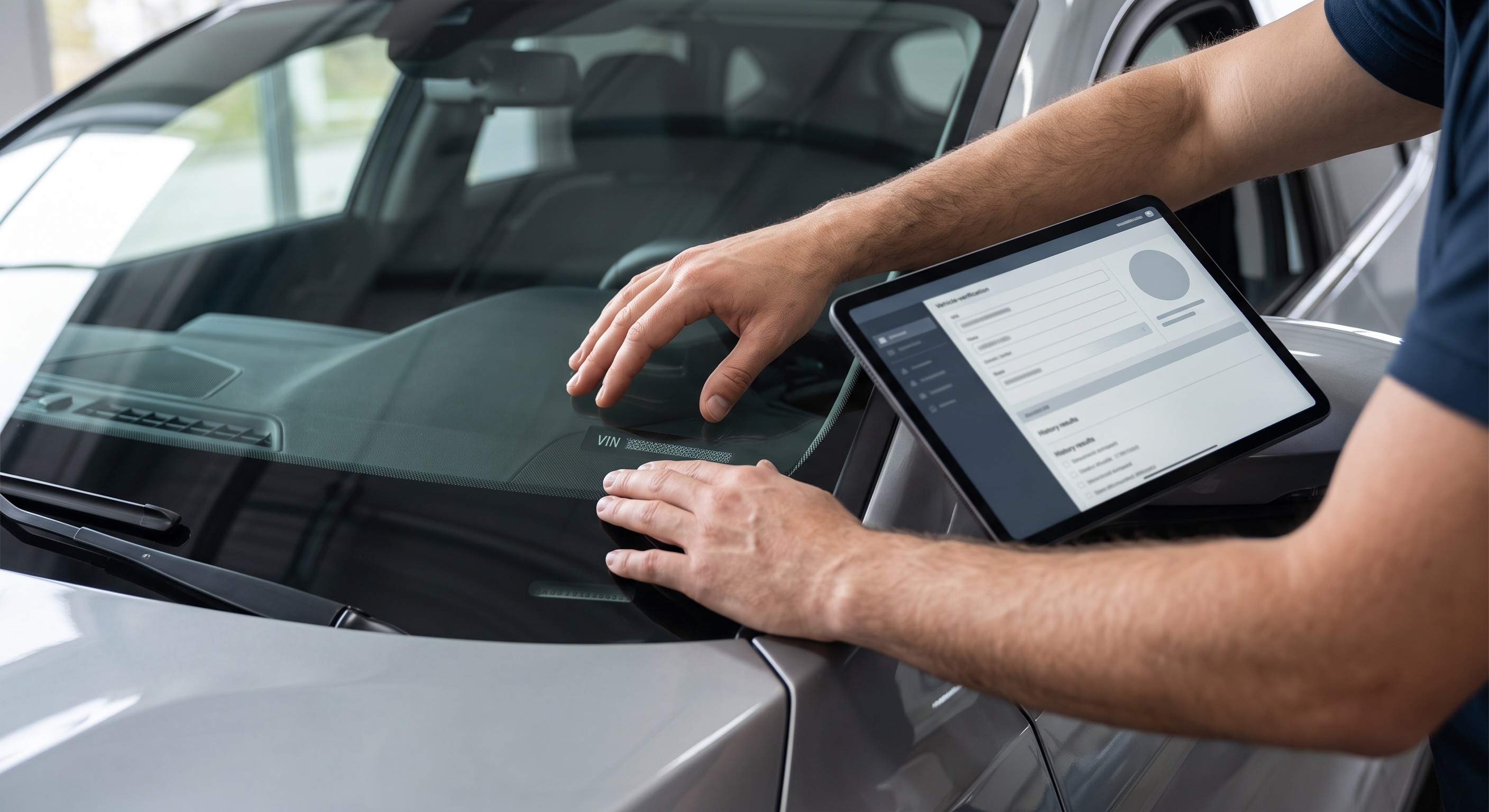
A history report is useful only if the VIN you searched belongs to the vehicle you are actually buying. Ask an independent inspector or another trusted person physically near the vehicle to confirm the VIN shown on the car.
The VIN on the vehicle should be consistent with the VIN used in the listing and paperwork. Where practical, compare more than one physical identifier rather than relying only on a photograph of a VIN plate sent by the seller.
This matters because VIN cloning can make a different vehicle appear connected to a legitimate identity or history record.
5. Check U.S. title and history information
Before buying a used U.S. vehicle, obtain independent vehicle-history information. The National Motor Vehicle Title Information System, or NMVTIS, can provide information reported by participating state agencies, insurers, salvage entities, and other sources.
Depending on the available records, useful history information can include:
- current and previous state title information
- title dates
- latest reported odometer information
- title brands such as salvage, junk, or flood
- salvage or total-loss information
- certain theft-related information
Use an approved data source rather than relying only on a report supplied by the seller. Treat any history report as one layer of verification, not as a guarantee that the vehicle has no undisclosed problems.
6. Use NICB VINCheck as an additional check
The National Insurance Crime Bureau provides a VINCheck service that may help identify records of unrecovered insurance theft claims or salvage reports from participating member insurers.
VINCheck is not a comprehensive vehicle-history report. Its coverage is limited, so use it as another layer of due diligence rather than a replacement for title-history checks, document review, or an independent inspection.
7. Check for open safety recalls
Fraud prevention and vehicle-condition checks are not the same thing, but both matter before an international purchase. NHTSA allows buyers to search a VIN for unrepaired U.S. safety recalls.
An open recall does not mean the seller is fraudulent. It is still useful information to know before agreeing on the vehicle and planning what will happen after purchase, especially because repair availability and procedures can vary by destination.
8. Arrange an independent inspection
If you cannot travel to the United States to see the vehicle yourself, try to arrange an independent pre-purchase inspection. The inspector or mechanic should ideally be selected independently rather than relying only on someone recommended by the seller.
Ask the inspector to confirm more than mechanical condition. Where practical, ask them to verify:
- that the vehicle physically exists at the stated location
- the VIN on the vehicle
- the general condition shown in the advertisement
- visible damage
- mileage displayed on the vehicle
- obvious differences between the listing and the actual car
A live video call can provide extra information, but it should not replace an independent inspection for a high-value remote purchase.
9. Review the Buyers Guide when applicable
For used vehicles sold by many U.S. dealers, the FTC Used Car Rule generally requires a Buyers Guide that describes important warranty information and whether the vehicle is being sold with or without a dealer warranty.
If you are dealing with a U.S. dealer, ask for the applicable Buyers Guide and read it before completing the purchase. Do not rely on verbal promises about warranty coverage, repairs, condition, refunds, or other important terms; ask for those terms in the transaction documents.
10. Confirm ownership and title paperwork
A legitimate vehicle transaction needs a clear documentary path showing who has the right to sell the vehicle. Ask to review the relevant title or ownership information and make sure the VIN is consistent across the vehicle and transaction documents.
For vehicles exported from the United States, ownership and title documentation also affects the export process. Exact requirements can depend on the vehicle, title situation, port, and current rules, so verify current official requirements before shipment.
Resolve ownership questions first
Do not send a large payment while important questions about who owns the vehicle, which VIN is being sold, or what ownership documents exist are still unresolved.
For exact title and export requirements, use current official guidance and qualified professional advice appropriate to the transaction.
11. Verify payment instructions separately
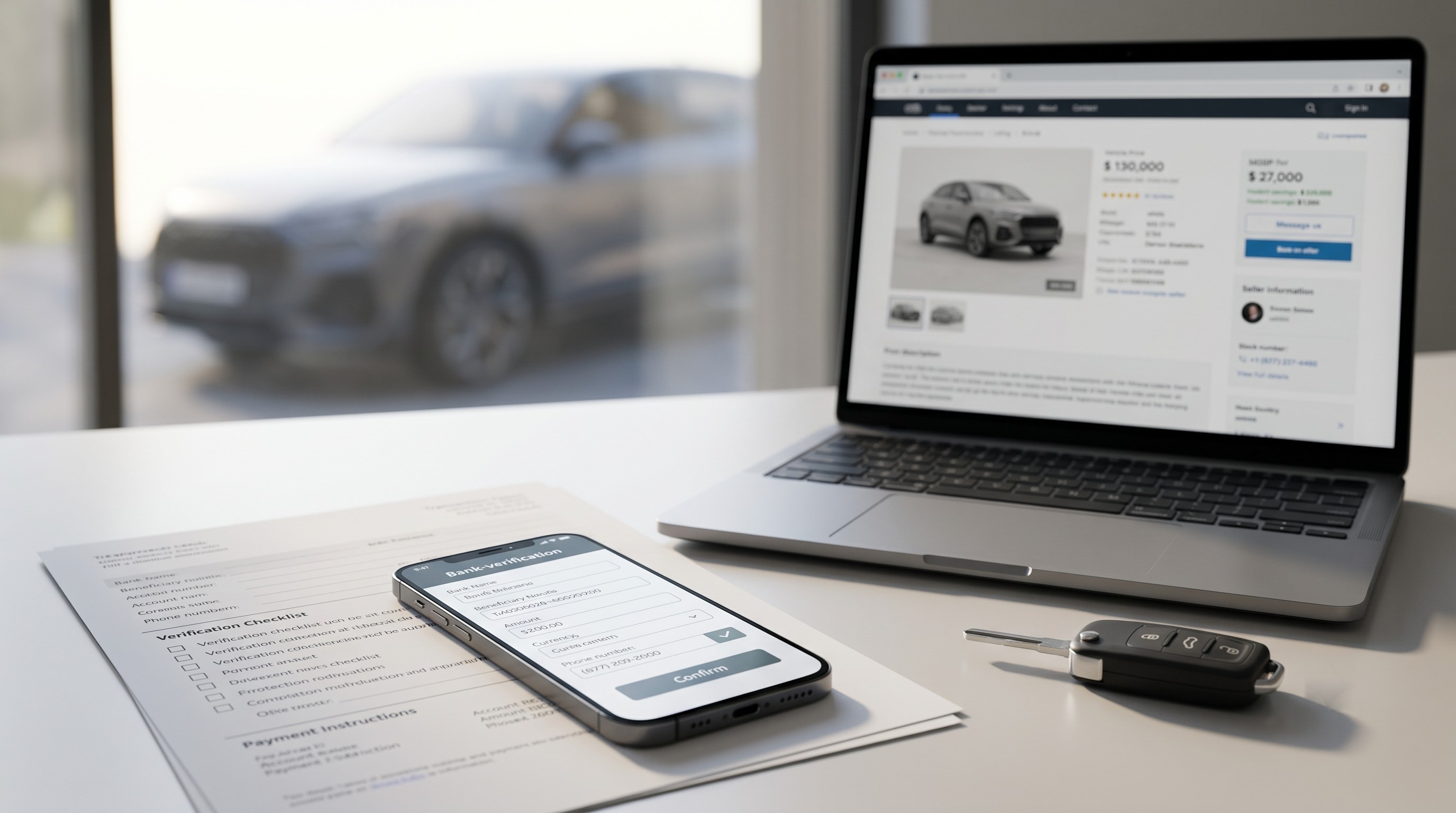
International vehicle transactions can involve substantial bank payments, so the payment stage deserves its own security check. A bank wire is not automatically evidence of a scam, but once funds are transferred, recovery may be difficult.
Before sending money:
- independently confirm who should receive the payment
- confirm the beneficiary and bank details
- check that the payment instructions match the transaction
- use a known phone number or another independent channel to confirm important instructions
- stop and re-verify if the bank account suddenly changes
Last-minute changes are especially important. Business email compromise scams can imitate or take over legitimate business communications and replace real payment instructions with a criminal account. Treat any change in account number or payment procedure as a new verification event, not a routine update.
12. Verify escrow and shipping companies
A scammer may not pretend to be only the vehicle seller. Fraudulent transactions can also use websites that claim to be an escrow company, shipping company, or buyer-protection service.
If a seller sends you a link to an escrow or transportation company:
- Do not assume the link is genuine.
- Search for the company independently.
- Confirm its domain and contact information yourself.
- Contact the company outside the seller’s email thread when practical.
- Confirm exactly what service the company is providing before paying it.
Be cautious of claims that a marketplace or well-known company “guarantees” a transaction that is actually taking place outside that company’s platform.
Use several independent checks
No single check can prove that a vehicle transaction is safe. A real VIN does not prove that the seller owns the vehicle, a real company name does not prove that the person emailing you works there, and a history report does not prove that the vehicle in the advertisement is the same one being sold.
The strongest approach is layered verification. Before making a large payment, connect the same facts across the seller, vehicle, VIN, history, physical inspection, ownership documents, written transaction terms, and verified payment recipient.
If one part does not match, stop and resolve it before moving forward.
Red flags that should make you stop
Stop and re-check
Be especially careful if the seller:
- refuses to provide the VIN
- will not allow an independent inspection
- cannot clearly confirm where the vehicle is located
- gives information that changes between conversations
- pressures you to pay before verification is complete
- asks you to leave a legitimate marketplace for an unfamiliar website
- claims an unrelated company guarantees the deal
- sends last-minute replacement bank instructions
- insists on gift cards, cryptocurrency, or another unusual payment method
- avoids independent communication
- cannot explain inconsistencies in the vehicle or paperwork
- becomes aggressive when you ask reasonable verification questions
Urgency is a common scam tactic. A legitimate opportunity is not worth skipping basic verification.
What to do if you already sent money
Act quickly. If you believe payment went to a scammer, contact your bank or payment provider immediately, explain that the transaction may be fraudulent, and ask whether the transfer can be recalled or reversed.
Preserve your records, including:
- advertisements
- emails and messages
- invoices
- bank instructions
- payment receipts
- names and phone numbers
- website addresses
- copies of documents you received
Depending on the circumstances, you may also need to report the incident to relevant U.S. authorities and to the appropriate authorities in your own country. Reporting options and procedures vary and can change over time.
Before you pay
Before you send money for a vehicle in the USA, ask yourself:
- Have I independently verified the seller?
- Do I have the full VIN?
- Does the VIN match the actual vehicle?
- Have I checked independent vehicle-history sources?
- Has someone independent inspected the vehicle?
- Do I understand who has the right to sell it?
- Are important promises written down?
- Have I independently verified the payment recipient and bank details?
- Have I verified any escrow or shipping provider separately?
- Is anyone pressuring me to ignore a problem or pay immediately?
If you cannot answer an important question confidently, resolve it before paying. Safe remote buying depends less on any one “proof” and more on whether independent facts consistently point to the same seller, vehicle, documents, and payment recipient.
Frequently asked questions
Verify the seller independently using contact information you find yourself. Check the business name, address, website, phone number, and reputation, then compare those details with the listing, invoice, payment recipient, and other transaction documents. If someone claims to represent a known company, contact that company through a separate channel before sending money.
Get the full VIN before making a payment and use independent sources to compare the vehicle’s specifications, title history, salvage or theft information, and open recalls where available. Most importantly, have someone independent confirm that the same VIN physically appears on the vehicle and is consistent with the transaction documents.
Yes. An independent pre-purchase inspection can help confirm that the vehicle exists at the stated location, verify its VIN and displayed mileage, identify visible or mechanical problems, and compare the actual condition with the advertisement. Choose the inspector independently when practical rather than relying only on a contact supplied by the seller.
Be cautious if payment instructions suddenly change, the seller pressures you to pay immediately, the beneficiary does not match the expected recipient, or you are asked to use an unusual payment method. Verify bank details through an independent communication channel, and treat any last-minute account change as a reason to stop and re-check.
Do not rely only on links or contact details provided by the seller. Search for the escrow or shipping company independently, verify its official domain and contact information, and contact it outside the seller’s email thread when practical. Confirm exactly what service it is providing and where any payment should legitimately be sent before transferring funds.