
If you want help finding a vehicle in the United States, a clear request is a good place to start.
You do not need to know every detail about the car. But you should prepare enough information to explain what you want, what you can spend, where the vehicle will go, and which requirements matter most to you.
The Short Answer
Before submitting a car sourcing request, prepare:
- the make and model you want;
- your preferred year or year range;
- your budget range;
- your destination country;
- your preferred timing;
- important features or specifications;
- mileage or condition preferences, if important;
- your preferred contact method; and
- any useful notes about where you can be flexible.
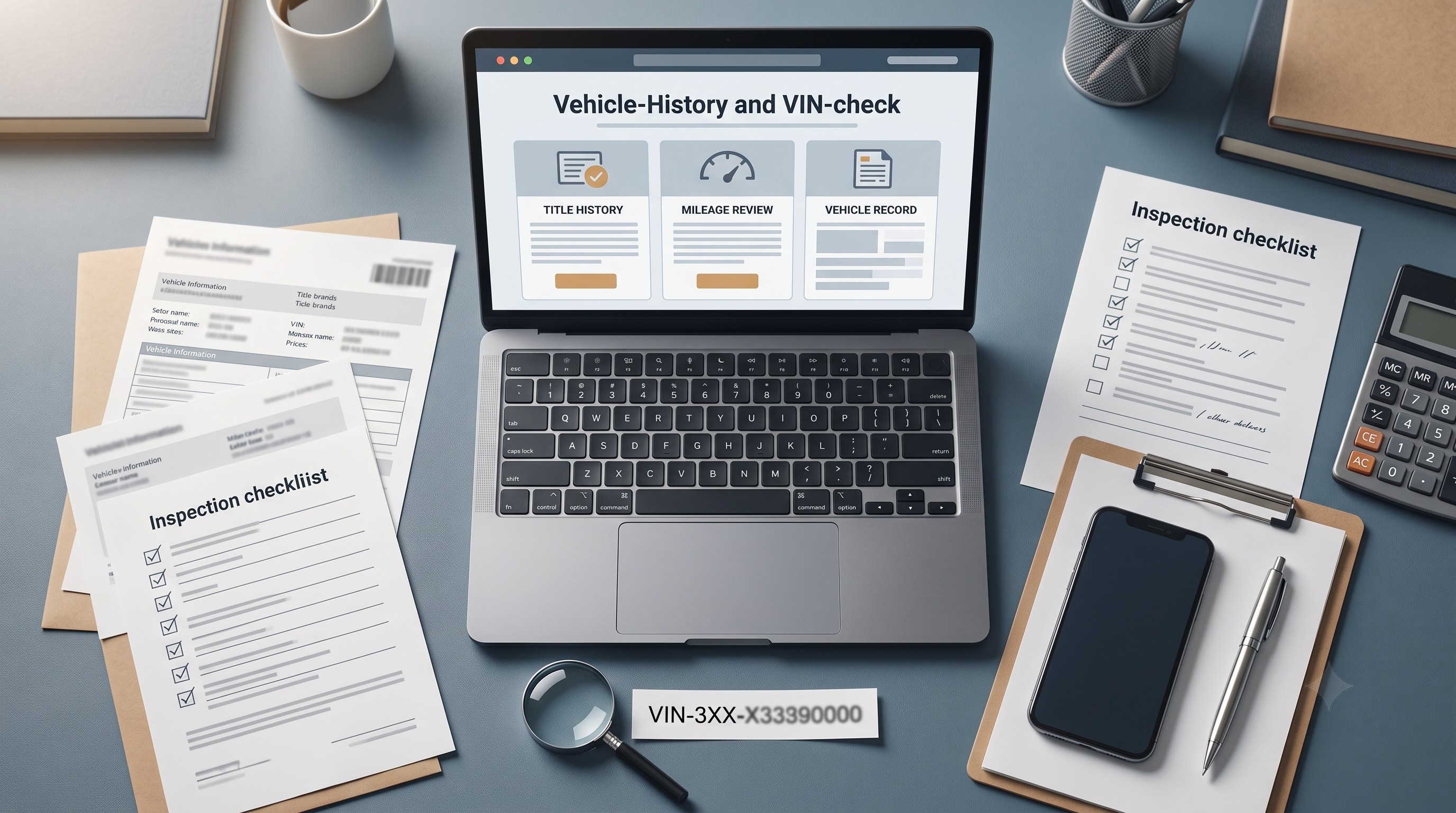
If you already found a specific vehicle, also keep the listing link, stock number, or VIN available if one is shown.
A request does not need to be long. It needs to be clear.
Why Does a Clear Car Sourcing Request Matter?
There can be many versions of the same vehicle in the U.S. market.
Two cars with the same model name may have different model years, trims, engines, equipment, mileage, colors, or other specifications. A general request such as “I want a Toyota SUV” leaves many questions unanswered.
A more useful request might say:
Toyota RAV4, 2021–2023, automatic, under my target mileage, with a flexible color choice.
Your budget, destination, and timing add important context.
Current U.S. and international vehicle-sourcing forms commonly ask buyers for this type of information before reviewing a request.
The goal is not to make the request complicated. The goal is to reduce assumptions.
1. Start With the Make and Model
Begin with the basic vehicle you want.
For example:
- Toyota RAV4
- Ford F-150
- BMW X5
- Mercedes-Benz GLE
If you are considering more than one model, you can say so.
For example:
Toyota RAV4 or Honda CR-V.
This is more useful than making your request so broad that almost any vehicle could qualify.
If you do not know the exact trim yet, that is fine. You can add the details you do know and identify which parts are still flexible.
2. Give a Model Year or Year Range
You do not always need one exact model year.
A range can make sense when several years would meet your needs.
For example:
2020–2023
or:
2022 or newer
A year range also makes your priorities clearer. If you want only one specific model year, state that instead.
Do not use a wide range simply because you are unsure. Think about whether vehicle age is an important requirement or only a preference.
3. Include the Trim or Important Specifications
Trim level can make a significant difference in the equipment included with a vehicle.
If the trim matters, include it in your request.
You can also mention important specifications such as:
- body style;
- engine or powertrain preference;
- transmission;
- drive type;
- seating requirements;
- exterior or interior color;
- important technology or comfort features; or
- a specific factory option you need.
You do not have to create a complete specification sheet.
Focus on details that would affect whether you would accept or reject a vehicle.
Separate Must-Haves From Preferences
This is especially useful.
For example:
Must have:
- 2021 or newer
- automatic transmission
- specific seating requirement
Preferred but flexible:
- black or gray exterior
- particular wheel style
This tells the person reviewing your request where there is room to consider alternatives.
4. Think About Mileage and General Condition
If mileage matters to you, include a target or maximum.
For example:
Prefer under 50,000 miles.
You can also describe your general expectations for the vehicle’s condition.
Avoid using technical title or damage classifications unless you understand exactly what they mean and they are relevant to your request. Vehicle documentation and export requirements are separate subjects that should be confirmed for the specific vehicle and transaction.
This guide is about preparing a sourcing request, not determining whether a particular vehicle can legally be exported or imported.
5. Prepare a Realistic Budget Range
Your budget is one of the most useful parts of the request.
Instead of saying:
I want the cheapest one available.
give a range you are actually prepared to consider.
If possible, also make clear what you mean by your budget.
For example:
My target budget is for the vehicle purchase itself.
or:
This is my broader total budget. Please tell me which costs would need to be considered separately.
This prevents two people from using the word “budget” to mean different things.
You do not need to guess shipping charges, duties, taxes, or other costs yourself in the request.
Those items can depend on the transaction and destination and should be verified separately rather than assumed.
6. Include the Destination Country
Tell ExportAutoUSA where the vehicle is intended to go.
For the initial request, the destination country is the key information to prepare.
Import rules, required documents, standards, and other requirements can differ between countries. The U.S. International Trade Administration specifically notes that foreign import regulations and documentation requirements vary by market.
That means you should not assume that a vehicle available in the United States can automatically be imported or registered in your country.
Before making a final purchase decision, relevant requirements should be checked for your specific destination and vehicle.
You do not need to turn your first sourcing request into a customs questionnaire. Simply provide the destination accurately so it is known from the beginning.
7. Explain Your Timing
When do you want to move forward?
A simple answer is enough.
For example:
- as soon as practical;
- within one to three months; or
- I am still researching.
Timing helps distinguish someone who needs a vehicle soon from someone who is still comparing possibilities.
Do not create an artificial deadline if you do not have one.
If you are only exploring your options, say that clearly.

8. Include Your Preferred Contact Method
Provide accurate contact information and identify how you prefer to communicate.
Depending on the options available on the request form, this may include email, phone, or WhatsApp.
For an international request, check that any phone or WhatsApp number includes the correct country code.
Also check your email address before submitting the form. A small typo can prevent a response from reaching you.
9. Add Useful Notes
The notes field is useful for information that does not fit naturally into the other fields.
Good notes may include:
- a second model you would consider;
- a color you do not want;
- an important feature;
- a maximum mileage;
- whether your year range is flexible;
- whether you already found a vehicle online; or
- another requirement that could affect your decision.
Keep the notes specific.
A long description is not automatically more useful than a short one.
10. If You Already Found a Vehicle, Include Its Details
Sometimes you are not asking someone to search broadly. You already found a vehicle and want to ask about that specific car.
In that situation, prepare any identifying information available on the listing, such as:
- the listing URL;
- stock number;
- VIN, if displayed;
- year;
- make;
- model; and
- the specific question you want answered.
This reduces the chance that two people are discussing different vehicles.
If the vehicle is already listed on ExportAutoUSA, use the vehicle-specific inquiry action where available rather than submitting an unrelated general request. You can also browse current inventory.
KEY PRINCIPLE
What Information Do You Not Need to Guess?
You do not need to invent details just to make the form complete.
If you are flexible on color, say so.
If you do not know the trim, leave it open.
If you have not decided on an exact year, provide a reasonable range.
If you do not know which shipping method would apply, do not guess.
The same principle applies to customs, title, export documentation, taxes, duties, and destination-country requirements. Those subjects can involve transaction-specific legal or regulatory requirements. frequently asked questions can provide more details.
For example, U.S. Customs and Border Protection has specific documentation rules for exports of used self-propelled vehicles, while foreign import requirements vary by destination. Those requirements should be confirmed for the actual transaction rather than reduced to assumptions in an initial vehicle request.
Example of a Clear Vehicle Request
Here is a simple example:
Vehicle: Toyota RAV4
Year: 2021–2023
Trim: Flexible
Mileage: Prefer under [target mileage]
Budget: [budget range]
Destination: [destination country]
Timing: Within 1–3 months
Must-have: Automatic transmission
Preferences: Neutral exterior color; flexible if the vehicle otherwise matches
Contact: [preferred contact method]
Notes: Open to two model years if the vehicle meets the main requirements.
That is enough information to communicate the request clearly without turning it into a long specification document.
Before You Submit: A Quick Checklist
Ask yourself:
- Did I name the vehicle clearly?
- Did I provide a year or year range?
- Did I explain my budget?
- Did I include my destination country?
- Did I state my timing?
- Did I identify any true must-have features?
- Did I explain where I am flexible?
- Did I provide correct contact information?
- If I found a specific vehicle, did I include the listing details?
If the answer is yes, your request is ready to send.
Frequently Asked Questions
Not necessarily. If you know the make and model but are flexible on the year, provide a year range. If you are considering two similar models, you can list both and explain your preference.
Yes. A budget range gives important context to a vehicle sourcing request. Make it clear whether you are describing a vehicle-purchase budget or a broader budget so there is less room for misunderstanding.
Import requirements can vary from one country to another. Providing the destination early gives important context, but specific customs, documentation, tax, registration, and eligibility questions should still be verified for the actual vehicle and destination.
Yes. If you have a specific vehicle in mind, include the listing link and identifying details such as the stock number or VIN when available. This makes it clear which vehicle you are asking about.
For a basic vehicle sourcing inquiry, start with the information needed to explain the vehicle request and provide a way to contact you. Do not send sensitive financial, identity, or payment information unnecessarily. If additional documentation is required later, first confirm why it is needed and how it should be provided securely. You can also u003ca href=u0022/contact-us/u0022u003econtact ExportAutoUSAu003c/au003e for more information.
Ready to Request a Car?
If you know what type of vehicle you want, prepare the details above and use the Request a Car form.
You do not need a perfect specification. Start with the information you know, be clear about what matters most, and avoid guessing about details that still need to be confirmed.