

Buying a vehicle from the United States can give international buyers access to a large selection of cars. But buying from another country also means you may have to make important decisions before you ever see the vehicle in person.
That makes the exporter just as important as the car.
Before you send money or commit to a purchase, ask clear questions about the company, the vehicle, the price, the documents, and what happens after the sale.
The goal is not to remove every possible risk. It is to make sure you understand exactly what you are buying and who is responsible for each part of the process.
The short answer: what should you check before buying?
Before buying a car from a U.S. exporter, try to verify three things:
- The company: Who are you doing business with, and who will receive your money?
- The vehicle: What is its VIN, condition, history, and title status?
- The process: What is included in the price, who handles each step, and what happens if something changes?
A reliable exporter should be able to answer reasonable questions clearly and put important details in writing.
Here are 10 questions to ask.
1. What is the exact company I am buying from?
Start with the basics.
Ask for the company’s:
- legal business name;
- business address;
- main contact information;
- name that will appear on the invoice; and
- name of the company or person that will receive payment.
Then check whether those details are consistent.
If a website uses one business name, the invoice uses another, and the payment instructions name an unrelated third party, ask why before proceeding.
Different legal entities can sometimes be involved for legitimate reasons. What matters is that the exporter explains the relationship clearly and documents it.
What a good answer looks like
The exporter gives you a clear legal business name and contact information, and the same identity appears consistently throughout the transaction.
Warning signs
Be cautious when the seller:
- avoids giving you its legal business name;
- cannot explain who will invoice you;
- gives conflicting company information;
- asks you to pay an unrelated person without a clear written explanation; or
- pressures you to pay before you can verify basic business details.
Do not rely only on a professional-looking website or social media account. Verify the company independently where possible.
2. What exactly are you doing for me?
The word exporter can describe several different business models.
One company might own the vehicle. Another might source a vehicle from a dealer or auction. Another may help with purchasing while separate companies handle inland transportation and international shipping.
Ask the exporter to explain its exact role.
For example:
- Are you selling the vehicle directly?
- Are you buying it from another seller on my behalf?
- Do you arrange an inspection?
- Who handles transportation inside the United States?
- Who handles export documentation?
- Who books international shipping?
- Which services are handled by other companies?
You should know where the exporter’s responsibility begins and ends.
What a good answer looks like
You receive a simple explanation of each step and who is responsible for it.
Warning signs
Be careful with vague answers such as:
“We handle everything.”
That statement is not useful unless the company explains what “everything” actually includes.
3. Can you give me the VIN and current vehicle information?
Before committing to a specific vehicle, ask for its Vehicle Identification Number, or VIN.
You should also ask for current information such as:
- year, make, model, and trim;
- mileage;
- available photos;
- known condition information;
- known damage;
- current location, when appropriate; and
- any available service or maintenance information.
The VIN gives you a way to compare information from different sources.
For U.S. vehicles, the National Highway Traffic Safety Administration also provides a VIN-based search for certain unrepaired safety recalls. (NHTSA)
What a good answer looks like
The exporter provides enough information for you to independently research the vehicle before you make a final decision.
Warning signs
Be cautious if you are expected to buy a specific used vehicle while basic identifying information remains unavailable or keeps changing.
4. What does the vehicle history and title record show?
Photos alone cannot tell you a vehicle’s full history.
For a used U.S. vehicle, ask about:
- current title status;
- previous title brands;
- salvage or total-loss history;
- reported odometer information;
- known accident or damage history; and
- theft information where available.
The U.S. Department of Justice’s National Motor Vehicle Title Information System, or NMVTIS, provides information that can include state title data, title brands, odometer information, salvage or total-loss records, and certain theft information. Title brands can include labels such as salvage, junk, or flood. (VehicleHistory)
NMVTIS is not a complete mechanical or repair history. The Department of Justice specifically notes that other information sources may still be necessary. (VehicleHistory)
If possible, obtain your own vehicle-history information instead of relying only on a screenshot sent by the seller.
What a good answer looks like
The exporter identifies the title status clearly, provides the VIN, and allows you to check available history independently.
Warning signs
Investigate further if:
- the VIN on a report does not match the vehicle;
- title information is unclear;
- a title brand is dismissed as unimportant without explanation; or
- the seller discourages independent history checks.
5. Can I arrange an independent inspection?
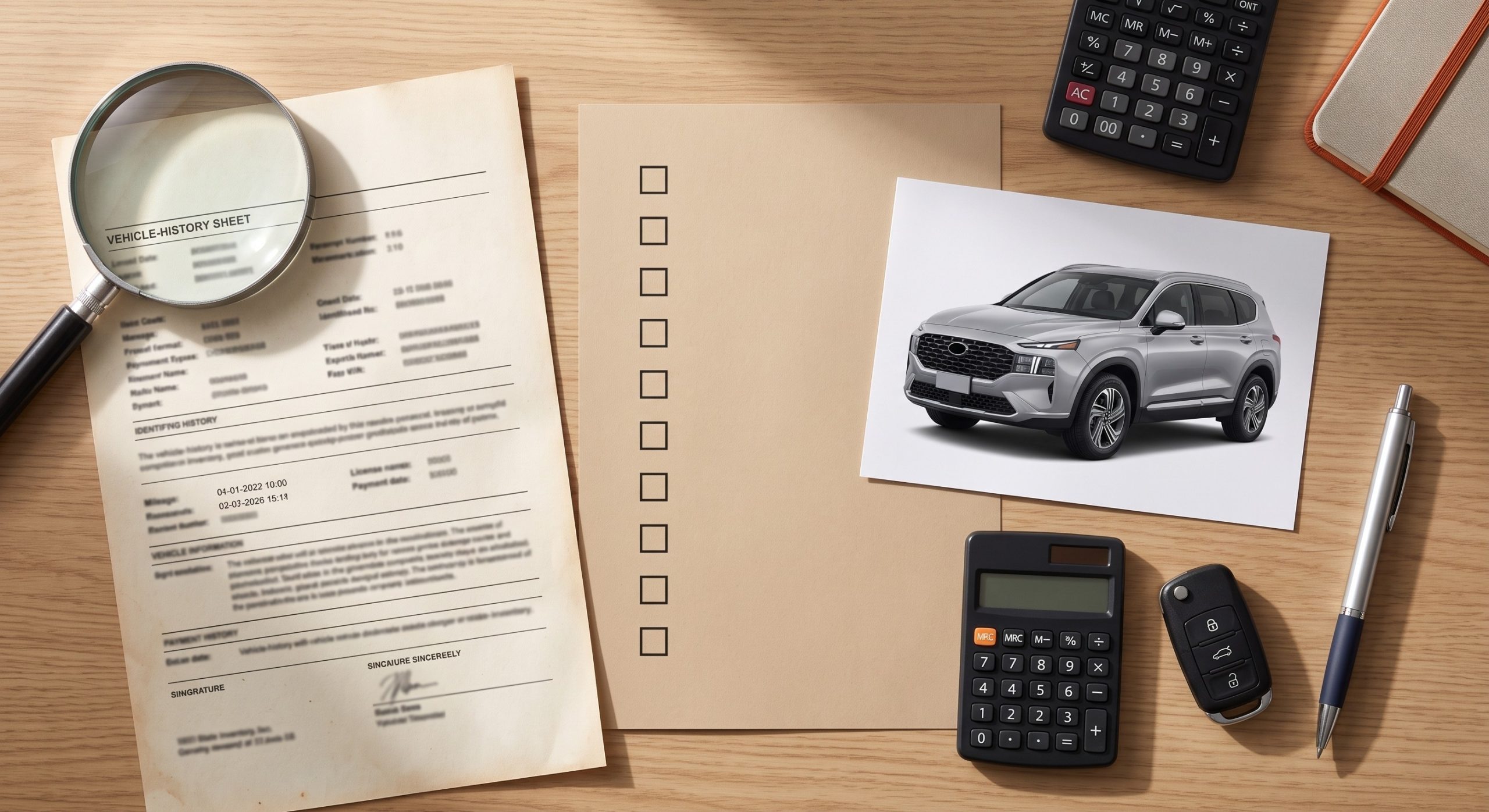
A vehicle history report cannot tell you everything about the car’s present mechanical condition.
For a used vehicle, ask whether an independent mechanic or inspection service can examine the vehicle before purchase.
The U.S. Federal Trade Commission recommends an independent mechanical inspection when buying a used vehicle and states that a vehicle history report is not a substitute for one. (Consumer Advice)
An inspection may help identify problems with areas such as:
- engine and transmission;
- suspension;
- brakes;
- tires;
- signs of previous repairs;
- fluid leaks;
- electrical systems; and
- visible structural damage.
The exact inspection should depend on the vehicle.
What a good answer looks like
The exporter explains whether an independent inspection is possible and how access to the vehicle can be arranged.
Warning signs
A refusal to allow any independent inspection deserves closer attention, especially when the reason is unclear.
Sometimes access restrictions are legitimate. If so, ask what alternative evidence of condition is available.
6. What is the complete written cost before I commit?
A low advertised vehicle price does not necessarily tell you the total amount you will spend.
Ask for a written breakdown showing what you are paying and what is excluded.
Depending on the transaction, items may include:
- vehicle purchase price;
- exporter or sourcing fee;
- dealer or auction-related fees, if applicable;
- inspection cost;
- transportation within the United States;
- document or administrative charges;
- port or handling charges;
- international transportation, if included;
- insurance, if offered; and
- other clearly identified charges.
Do not assume two quotes cover the same services simply because both show a total price.
Ask one important follow-up
“Which costs are not included in this quote?”
That question can be more useful than asking only for the total.
Destination-country taxes, duties, registration charges, and other import costs can vary significantly and should be verified separately before purchase.
What a good answer looks like
You receive an itemized written quote with clear inclusions and exclusions.
Warning signs
Be cautious when significant fees appear only after you have paid or when the company will not explain what its quote covers.
7. How and when will I pay, and who receives the money?
International purchases often involve large payments, so payment instructions deserve careful verification.
Before paying, ask:
- when each payment is due;
- what each payment covers;
- whether any amount is refundable;
- which legal entity receives the funds;
- what currency is required; and
- what happens if payment instructions change.
BEFORE YOU PAY
If you receive new bank details by email or messaging after the transaction has started, verify the change using contact information you already know to be genuine.
Be especially careful if someone pressures you to use an unusual payment method or says you must pay immediately without time to verify the transaction.
The Federal Trade Commission warns that scammers often favor payment methods that can be difficult to reverse and commonly use urgency to prevent people from checking a transaction carefully. (Consumer Advice)
What a good answer looks like
Payment terms are written clearly, the recipient is identifiable, and there is a consistent invoice or transaction record.
Warning signs
Stop and verify before paying if:
- the beneficiary suddenly changes;
- the company refuses to issue an invoice;
- the payment recipient cannot be connected to the transaction;
- you are told not to contact your bank; or
- extreme urgency appears immediately before payment.
8. What happens if the purchase does not go as planned?
Ask this before something goes wrong.
Possible problems can occur before a vehicle is shipped. For example, a vehicle may become unavailable, documentation may take longer than expected, or an inspection may reveal an issue that changes your decision.
Ask the exporter to explain in writing what happens if:
- the specific vehicle cannot be purchased;
- the vehicle differs materially from the information you received;
- required documents are not available;
- you decide not to proceed after an inspection;
- a transaction is cancelled; or
- money has already been paid.
Do not assume a payment is refundable unless the written terms say so.
What a good answer looks like
The company has understandable written terms explaining what happens in common problem situations.
Warning signs
Statements such as “don’t worry, we will work it out” are not a replacement for written terms when significant money is involved.
9. Who handles the U.S. export documents?
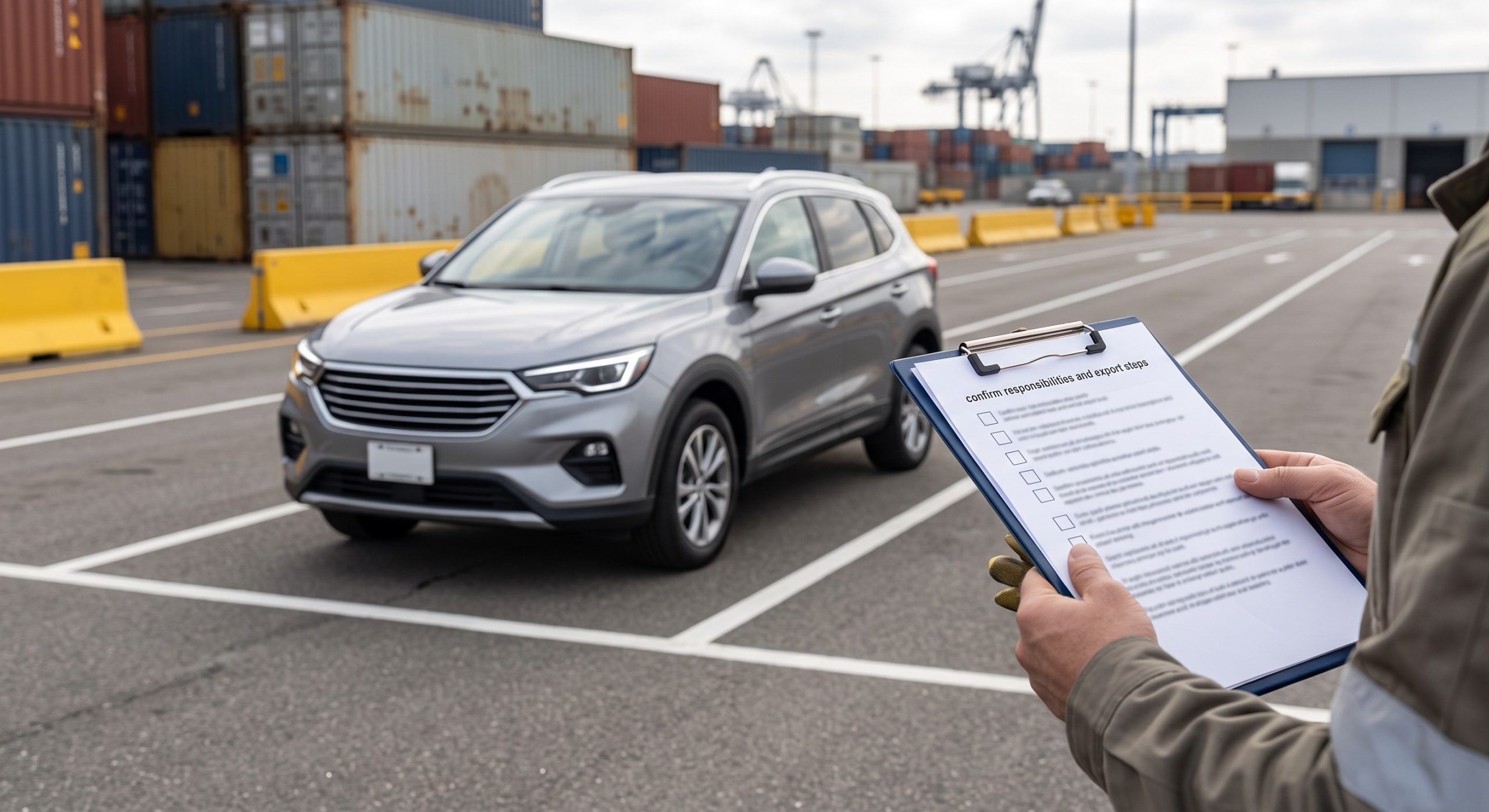
Exporting a vehicle is not simply a matter of buying the car and delivering it to a ship.
Ask who is responsible for the U.S. export side of the transaction and which documents will be prepared, submitted, or returned to you.
U.S. Customs and Border Protection has specific documentation requirements for exports of used self-propelled vehicles. For U.S.-titled vehicles, title or other ownership documentation is an important part of the process, and the exact requirements can depend on the vehicle’s documentary status and method of export. (CBP Help Center)
Rather than trying to become an export-document expert yourself, ask the exporter:
- Who is responsible for the export filing?
- Who checks the vehicle’s ownership documents?
- Which documents do you need from me?
- Which documents will I receive?
- At what point are they provided?
- Who should I contact if a document is delayed or rejected?
Requirements can change and individual ports may have their own procedures, so current requirements should be confirmed before shipment.
What a good answer looks like
Responsibilities are clearly assigned instead of assuming that “the shipping company” or “someone at the port” will handle everything.
Warning signs
Be cautious if nobody involved in the transaction can explain who is responsible for the export documentation.
10. Have I confirmed that this vehicle can be imported into my country?
A vehicle leaving the United States does not automatically mean it can be imported, registered, or legally used in every destination country.
Before buying, check the rules that apply where the vehicle is going.
Depending on the country and vehicle, relevant issues may include:
- vehicle age restrictions;
- emissions or technical standards;
- safety requirements;
- title or damage history;
- steering configuration;
- inspections;
- taxes and duties;
- documentation; and
- registration requirements.
Do not rely on a general statement such as “we ship worldwide” as proof that a particular vehicle meets the rules in your country.
Ask what the exporter knows, but independently confirm important destination requirements with the appropriate government authority, customs professional, or other qualified local expert.
What a good answer looks like
The exporter does not make unsupported promises and clearly separates U.S. export services from requirements controlled by your destination country.
Warning signs
Be careful when someone guarantees import approval without first checking the specific vehicle and destination requirements.
A simple checklist before you send money
Before you commit to a vehicle, make sure you can answer these questions:
- Do I know the exact company I am paying?
- Do I understand what the exporter is responsible for?
- Do I have the correct VIN and current vehicle information?
- Have I reviewed available title and vehicle-history information?
- Have I considered an independent inspection?
- Do I have a written breakdown of costs and exclusions?
- Do I understand the payment terms and recipient?
- Do I know what happens if the transaction changes or is cancelled?
- Is responsibility for U.S. export documents clear?
- Have I checked whether the vehicle is suitable for import into my country?
If several answers are still unclear, get more information before making the purchase.
KEY TAKEAWAY
A good international vehicle transaction should become more understandable as you ask questions, not less.
Frequently Asked Questions
Start by verifying the company’s legal identity and contact information. Then check whether its invoice, payment recipient, website, and explanations are consistent.
For a specific vehicle, also verify information independently. Ask for the VIN, research available title and vehicle history records, and consider an independent inspection. No single website badge, review, document, or company claim should replace basic due diligence.
No. A history report can provide useful information about a vehicle’s past, but it cannot confirm its complete current mechanical condition. The FTC and the U.S. government’s NMVTIS consumer guidance recommend considering an independent vehicle inspection in addition to checking history information. (Consumer Advice)
Not automatically. First compare what each quote includes. One quote may cover only the vehicle. Another may include additional purchasing, transportation, documentation, or shipping services Ask every exporter for an itemized breakdown and a clear list of exclusions before comparing the totals.
Questions are part of the buying process
Asking detailed questions does not mean you distrust every exporter.
It means you are treating an international vehicle purchase like an important financial decision.
Clear answers help you compare companies on more than price. They also help you understand the vehicle, identify responsibilities, and avoid assumptions before money changes hands.
If you already know what type of vehicle you want from the United States, you can use ExportAutoUSA’s Request a Car page to describe what you are looking for and start the next step.
You can also review the site’s Frequently Asked Questions or contact ExportAutoUSA if you have a question before submitting a vehicle request.