

Buying a vehicle in the United States can give an international buyer access to many different makes, models, specifications, and sellers.
But finding the vehicle is only part of the process.
When you live outside the United States, you may also need to communicate with sellers, review the condition of a vehicle from a distance, understand its history, coordinate the purchase, and prepare for the export process.
A U.S. car sourcing service can help connect these steps.
Instead of limiting your search to vehicles you happen to find yourself, you provide your requirements to a sourcing company. The company can then help look for suitable vehicles and guide you through the next stages of the purchase.
BEFORE YOU START
The exact services vary between providers, so it is important to understand what is included before you send money or commit to a vehicle.
What Is a Car Sourcing Service?
A car sourcing service helps a buyer look for a vehicle that matches specific requirements.
You might provide details such as:
- Make and model
- Model year or year range
- Preferred trim or specifications
- New or used condition
- Maximum mileage
- Budget
- Preferred vehicle condition
- Destination country
- Purchase timeline
The sourcing company then uses this information to look for possible matches.
Depending on the provider, the service may also help with vehicle evaluation, seller communication, purchase coordination, documentation, inland transportation, or preparation for export.
These services should not be assumed to be identical from one company to another. Ask what is included before starting the process.
Why Car Sourcing Can Be Useful for International Buyers
International buyers face a different buying process from someone who lives close to the vehicle.
A buyer in the United States may be able to visit several dealerships, inspect cars in person, meet sellers, and arrange local paperwork directly.
A buyer overseas often has to make important decisions remotely.
That makes several parts of the process especially important.
You Can Search for the Vehicle You Actually Want
A vehicle inventory page is useful when the right car is already listed.
But sometimes it is not.
You may want a particular model, year, trim, mileage range, color, engine, or specification that is difficult to find in available inventory.
A sourcing request allows you to start with your requirements instead of starting with a specific listing.
That can be especially useful when your preferred vehicle is specific.
You Have Someone in the U.S. Coordinating the Search
Time zones and distance can make vehicle purchases more difficult.
Sellers may need questions answered quickly. Listings may change. Additional information may need to be requested.
A U.S.-based sourcing partner can help coordinate parts of that communication.
This does not remove the need for the buyer to review the transaction carefully. It can, however, provide a clearer point of contact during the search.
You Can Compare Vehicles Before Choosing One
The first vehicle that matches your make and model may not be the best option.
Two similar cars can have important differences in:
- Mileage
- Condition
- Equipment
- Maintenance history
- Accident history
- Title or brand history
- Seller information
- Asking price
A good sourcing process should give you enough information to compare realistic options instead of making a decision based only on photos or price.
How the U.S. Vehicle Sourcing Process Usually Works
Every company has its own process, but international vehicle sourcing generally follows several logical stages.
1. Define the Vehicle You Want
The first step is giving the sourcing company clear requirements.
The more precise you are, the easier it is to identify suitable vehicles.
For example, instead of asking for:
A Toyota SUV under $30,000.
A more useful request might specify:
- Toyota Highlander
- 2021 or newer
- Maximum preferred mileage
- Required seating configuration
- Preferred trim
- Acceptable colors
- Maximum vehicle budget
- Destination country
You do not need to know every detail.
If you are flexible about the year, mileage, trim, or color, say so. That gives the sourcing team more room to identify possible matches.
2. Search for Suitable Vehicles
Once the requirements are clear, the sourcing process moves to vehicle discovery.
Possible vehicles may come from different types of U.S. sellers and marketplaces. Which sources are available depends on the sourcing company and its actual access.
This is one reason to ask a provider how it searches for vehicles rather than assuming it has access to every dealer, auction, or marketplace.
The goal should be to find vehicles that match the buyer’s priorities closely enough to justify further evaluation.
3. Review the Vehicle Before Committing
Finding the right model is not enough.
A used vehicle should also be evaluated as an individual vehicle.

Important checks can include:
- VIN information
- Vehicle history
- Title and brand information
- Reported mileage
- Visible condition
- Seller disclosures
- Available maintenance information
- Recall information
- Independent inspection findings, when appropriate
The U.S. Department of Justice’s National Motor Vehicle Title Information System, or NMVTIS, provides information such as current title data, brand history, reported odometer information, and certain salvage or total-loss records. The government also encourages buyers to use an independent inspection and other available information before making a purchase.
For safety recalls, the U.S. National Highway Traffic Safety Administration provides a VIN-based recall lookup.
USE SEVERAL CHECKS
No single report can tell you everything about a used vehicle. History information, physical inspection, seller information, and the buyer’s requirements should be considered together.
4. Understand the Costs Before Approving a Purchase
The advertised vehicle price may not represent the complete cost of purchasing and exporting the vehicle.
Depending on the transaction, other costs may exist for services such as:
- Vehicle sourcing
- Inspection
- Purchase or transaction handling
- Inland transportation
- Storage
- Export preparation
- International shipping
- Destination-country customs, taxes, duties, or other charges
Not every transaction includes all of these items, and the amounts vary.
Before approving a purchase, ask which costs are known, which are estimates, which are paid to third parties, and which costs will only be determined later.
Do not assume that a low vehicle price automatically means a low total cost.
5. Coordinate the Purchase
After you approve a vehicle, the purchase stage begins.
Before sending funds, make sure you understand:
- Who is purchasing the vehicle
- Who will receive your payment
- What the payment covers
- Which documents you will receive
- When ownership documentation is expected
- What happens if the transaction cannot be completed
Payment terms and procedures differ between businesses. They should be provided clearly by the company handling your transaction.
6. Prepare for Export
Buying the vehicle and exporting the vehicle are related, but they are not the same step.
U.S. Customs and Border Protection has specific procedures and documentation requirements for exporting used self-propelled vehicles. Requirements can also depend on the vehicle and the circumstances of the export.
The destination country may have its own import rules, taxes, duties, vehicle standards, and required documents. The U.S. International Trade Administration notes that export-document requirements vary according to the shipment and destination and recommends confirming current requirements before shipping.
For that reason, check export and destination-country requirements before committing to a vehicle, not after the purchase is complete.
IMPORTANT
This article provides general educational information. Customs, tax, legal, shipping, and import requirements should be confirmed for your specific transaction and destination.
Car Sourcing Service vs. Buying Directly
You do not always need a sourcing company to buy a U.S. vehicle.
Some buyers prefer to find a vehicle and work directly with the seller.
The better option depends on how much of the process you can manage yourself.
| Buying directly | Using a sourcing service |
|---|---|
| You search for vehicles yourself | You provide requirements and receive sourcing support |
| You contact sellers directly | A sourcing company may help coordinate seller communication |
| You arrange your own due diligence | The provider may help coordinate history checks or inspection |
| You manage the purchase process | The provider may help coordinate the transaction |
| You arrange export separately | Some sourcing companies also provide or coordinate export support |
| You maintain direct control over each step | You have a U.S.-based point of contact helping with the process |
Neither method is automatically better.
The important question is whether the service adds useful support for the parts of the process that are difficult for you to manage from another country.
What Should You Ask a U.S. Car Sourcing Company?
Before choosing a provider, ask clear questions about how the service works.
What exactly is included?
Does the company only search for vehicles, or does it also help with inspection, purchasing, inland transport, and export preparation?
Ask for the scope in writing.
Where do you search for vehicles?
Do not assume a company has access to every U.S. auction, dealer network, or vehicle database.
Ask which types of sellers or sources can realistically be searched for your request.
How is the vehicle evaluated?
Ask what information you will receive before approving a purchase.
That may include vehicle history information, photographs, seller disclosures, inspection results, or other documentation depending on the vehicle and service.
What fees will I pay?
Ask how the sourcing company is compensated.
Also ask which expenses are separate from the sourcing fee.
You should understand the difference between the vehicle price, service charges, transport costs, shipping costs, and destination expenses.
BEFORE YOU PAY
Who receives my payment?
International vehicle purchases can involve large payments.
Make sure you know the legal business receiving your money, what the payment is for, and what documentation confirms the transaction.
What happens if you cannot find the right vehicle?
A sourcing request does not mean that a suitable vehicle will always be available.
Ask what happens if no vehicle meets your budget or requirements.
Which export and import steps are my responsibility?
A sourcing company may handle some parts of the process but not others.
Ask exactly where its responsibility ends and what you will need to arrange separately.
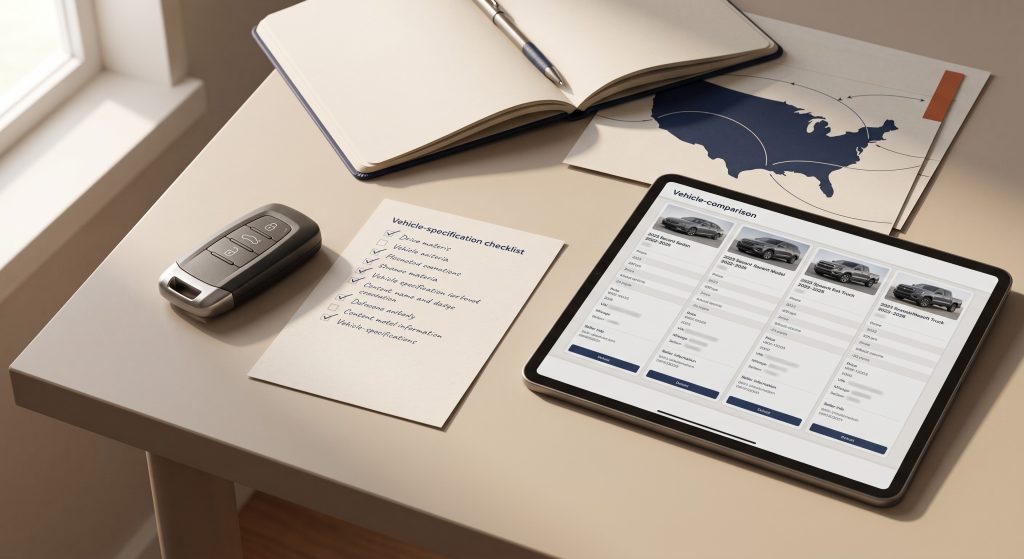
What Makes a Good Vehicle Sourcing Request?
Clear requests usually lead to a more focused search.
Try to separate your requirements into three groups.
Must-Have Requirements
These are details you will not compromise on.
For example:
- Specific make and model
- Maximum budget
- Minimum model year
- Required number of seats
- Required engine or drivetrain
Preferred Requirements
These are important but flexible.
For example:
- Exterior color
- Interior color
- Trim level
- Wheel design
- Optional equipment
Flexible Requirements
Tell the sourcing company where you are willing to compromise.
Perhaps you would accept an older model with lower mileage, or a different color if the vehicle has the equipment you need.
This flexibility can make the search more practical.
When Does a Car Sourcing Service Make the Most Sense?
Vehicle sourcing can be particularly useful when:
- You live outside the United States.
- You cannot inspect vehicles personally.
- You want a specific vehicle that is not currently listed.
- You want help comparing several U.S. vehicles.
- You prefer one point of contact for the sourcing and purchase process.
- You want to understand the next steps before committing to a car.
It may be less useful if you already have a trusted seller, can evaluate the vehicle yourself, and are comfortable managing the purchase and export process independently.
How ExportAutoUSA Helps Buyers Looking for a Specific Vehicle
ExportAutoUSA is built for international buyers who want to purchase vehicles from the United States.
If you already see a suitable vehicle in the available inventory, you can inquire about that vehicle.
If the vehicle you want is not listed, you can submit a vehicle request instead.
The Request a Car process lets you provide information such as the vehicle you want, your budget, destination country, and timeline. That gives ExportAutoUSA a starting point for reviewing your request and explaining the next steps.
You do not need to choose a vehicle simply because it is already listed.
Start with the vehicle that makes sense for your needs.
Frequently Asked Questions
Not always. A sourcing service focuses on helping find and acquire a vehicle. An exporter focuses on moving a vehicle through the export process. Some companies may provide both types of support, while others provide only one. Always confirm the scope of the company you are considering.
No. You can usually begin with a make, model, budget, year range, and other preferences. However, clearer requirements make it easier to identify suitable vehicles.
Vehicle availability changes, so buyers should be cautious about treating a specific vehicle, price, or timeline as guaranteed before the vehicle has actually been located and confirmed. A useful sourcing process should explain what is available and let you decide whether a proposed vehicle meets your requirements.
For a used vehicle, history information should be one part of your due diligence. NMVTIS can provide information about title and brand history, reported odometer information, and certain salvage or total-loss records. The U.S. government also recommends considering an independent vehicle inspection and additional information sources.
That depends on the provider. Import rules vary by destination. Ask which parts of the export and import process are included, and which responsibilities remain with you. Confirm current destination-country requirements before purchasing the vehicle.
Looking for a Specific Vehicle in the USA?
Tell ExportAutoUSA what you are looking for through Request a Car.
Provide the make, model, budget, destination, and other important requirements so the team can review your request and discuss the next steps.